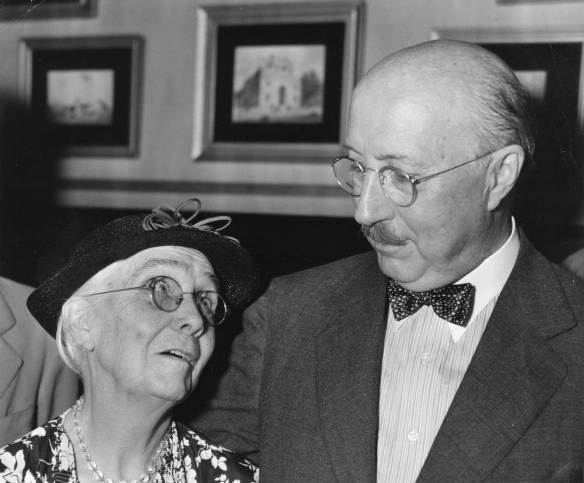

George Connell was well-known as a famous Republican politician. During 1913-1939, he was one of the members of the Philadelphia City Council. In 1939, George began to perform the duties of the mayor of Philadelphia. Later, the legality of his tenure caused certain doubts.
Philadelphiayes.com will tell you more.
Family
George was born on November 2, 1871 in Philadelphia. His father was the sheriff of the city. The grandfather of the future politician was a member of the Pennsylvania Senate. It was the grandfather of our hero who promoted the draft laws on the creation of Fairmount Park and the Mount Moriah Cemetery.
Continuation of the family business
George himself later also engaged in political activity. He first became a member of the Republican party and took an active part in Philadelphia politics.
In 1913, our hero became one of the members of the Philadelphia City Council. Moreover, at first, he was a member of the Common Council, and in 1915, he joined the Select Council.
January 1936 was marked by the fact that George assumed the position of city council president.
New position
On August 11, 1939, mayor Samuel Davis Wilson left the mayoral post due to illness.
Since Connell was the president of the city council at the time, he was immediately sworn in and became acting mayor.
When he took office, the police officers were immediately transferred from administrative work to patrolling. The new mayor explained this decision by the fact that Philadelphia lacks patrol officers.
Concerns about the budget
In addition, another striking feature of Connell’s mayoralty is that he tried to carefully distribute the budget. With the Great Depression in mind, George was very worried about the lack of funds. He was especially concerned about cutting municipal services.
The fall of 1939 was marked by the fact that a loan of forty-one million dollars was granted for the needs of Philadelphia. These funds were provided by the Reconstruction Finance Corporation. Later, the money was returned through revenue from the Philadelphia Gas Plant.
A scandalous tax
During his tenure as mayor, our hero introduced a wage tax.
This decision caused a flurry of discontent among locals. One of the Philadelphia workers even went to court with a lawsuit, which indicated that such a tax was unconstitutional.
However, later the decision of the Supreme Court from 1943 ruled that the mentioned tax was absolutely constitutional.
Doubts about legality
Another interesting fact is that the media often referred to Connell as acting mayor. However, he officially held this position since 1939.
The Philadelphia legislation contained a rule that the mayor could be replaced by a person voted for by the council. However, any member of the council cannot be re-elected to another position until the term for which he was elected as a member of this body expires. Given that Connell was not only a member but also the president of the council, some officials later decided that he was not eligible to be mayor.
However, all these inaccuracies, disagreements and controversies did not prevent Connell from serving his entire term.
After that, the new mayor of Philadelphia, Robert Lamberton, appointed our hero to the position of Director of Public Welfare.
But this is another story.
The end of life
George Connell’s life ended on October 22, 1955. The stroke caused his death. He was buried in the famous Philadelphia Mount Moriah Cemetery.