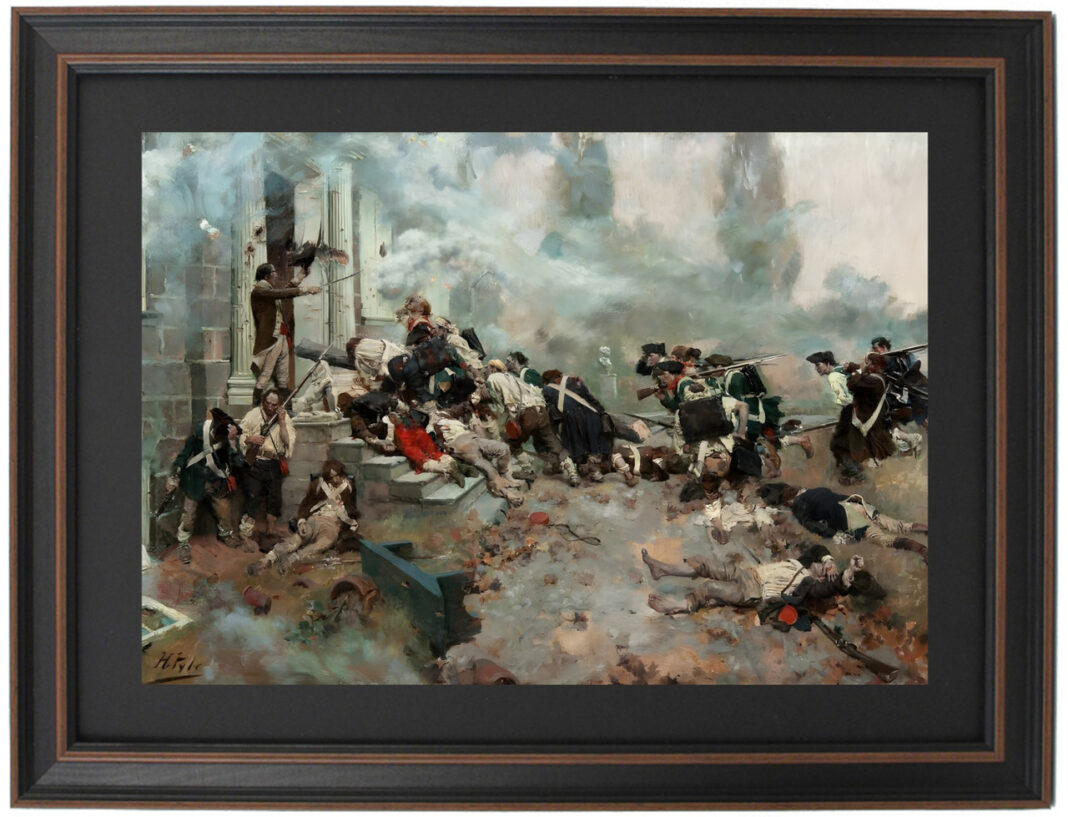

October 1777. Following the loss of Philadelphia, the then-capital of the revolution, the spirit of the Continental Army was broken, and George Washington desperately needed a lightning-fast victory. He chose Germantown, where the British, commanded by General Howe, felt too confident and seemed to be settling in for a “winter slumber.” Washington’s plan was brilliant: strike simultaneously with four converging columns, catch the enemy off guard, and turn the tide of the war.
But what happens when a flawless strategic plan goes wrong? The answer came that autumn morning: a dense, impenetrable fog. This battle, which was meant to be a triumph, morphed into one of the most confusing and chaotic episodes of the War for Independence. How did the fog turn American soldiers against each other, why did the heroic defense of one stone house cost Washington the victory, and how, despite the defeat, did this battle inspire France to join the war? We analyze the details of this painful loss on philadelphiayes.
The Strategic Blueprint
In September 1777, American rebels suffered a serious political and moral setback when British forces led by General William Howe successfully captured Philadelphia. At that time, the city was the de facto capital of the Revolution. The loss of such a vital center demanded an immediate and decisive response from George Washington to restore faith in the War for Independence.
Washington quickly assessed the situation, understanding that the British occupation forces had divided their strength between Philadelphia and the surrounding settlements to ensure territorial control. Howe’s main garrison, numbering about 9,000 soldiers, was stationed in Germantown—a small village roughly eight miles north of the city. The American commander saw vulnerability in this dispersal.
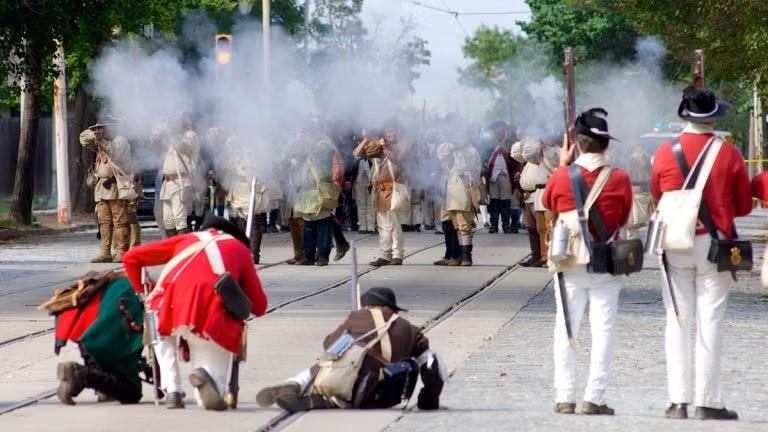
Washington planned an extraordinarily complex and ambitious maneuver: a nighttime march of his troops from several directions, culminating in a dawn attack on the British camp.
The main goal was not only to inflict a devastating defeat on the adversaries but also to drive Howe’s forces out of the Philadelphia vicinity. Strategically, Washington aimed to replicate the striking success of the Battle of Trenton in 1776, where he used the element of surprise by executing a winter night march and launching a sudden strike against Hessian mercenaries. A success at Germantown would have an equal, if not greater, psychological and political impact, proving to allies (especially France) that the Continental Army was capable of winning even after major losses. The plan involved a concentrated attack by four converging columns, requiring perfect coordination in the dark, which was in itself a huge risk.
The Complexity of the Plan
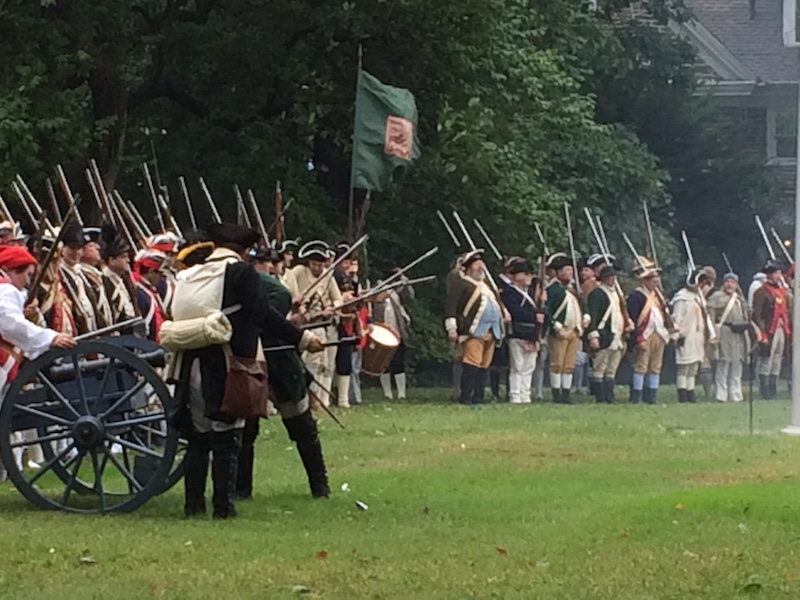
The attack was conceived as a synchronized operation of four different American columns. This was an extremely ambitious plan that demanded ideal coordination and strict adherence to the schedule. The columns had to move along different routes in the darkness and over rugged terrain.
The primary goals of this maneuver were:
- Outflanking the enemy;
- Pressing British positions from multiple sides simultaneously;
- Creating panic and forcing the enemy into retreat.
Unfortunately, the complexity of this idea, coupled with the inexperience of some commanders, led to fatal delays.
The Fog Factor
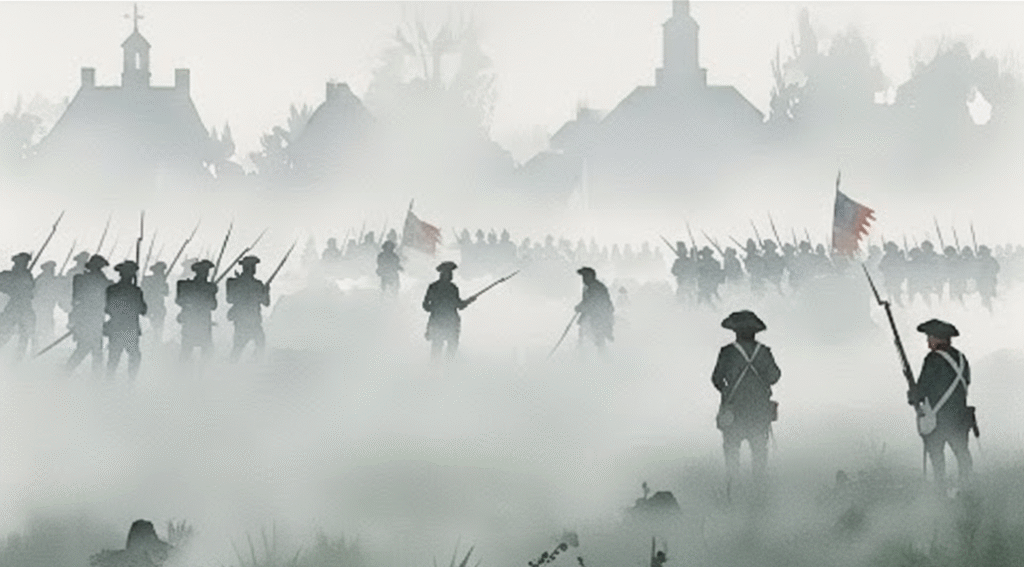
The attack, as planned by Washington, began in the early morning. Initially, American troops did achieve some success, particularly on the right flank, catching the British outposts by surprise. However, the decisive—and ultimately tragic—factor was the dense morning fog that blanketed the battlefield. This natural phenomenon, intended to aid the attackers by concealing their maneuver, instead caused complete chaos and disorientation among the American units.
Due to the thick mist and near-zero visibility, commanders lost visual contact and could not coordinate the complex movement of the four columns. The tragic climax occurred when one American column, moving along the road, mistakenly opened fire on another American unit, believing them to be British forces. This act of friendly fire caused significant casualties and dealt a serious demoralizing blow. The confusion spread rapidly, paralyzing the advance and forcing many American soldiers to retreat in disarray, as they could no longer distinguish allies from enemies.
The House-Fortress
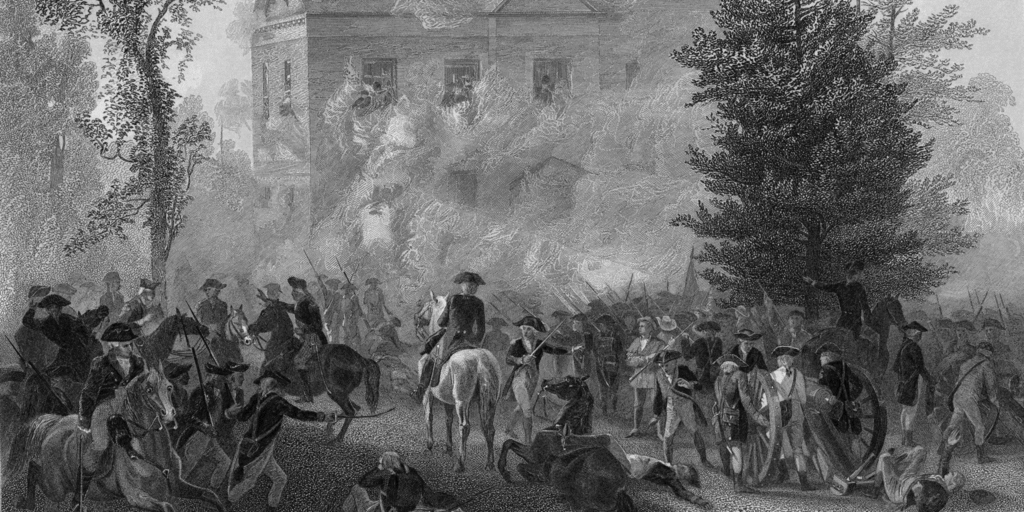
On the central road of Germantown, a group of approximately 120 British soldiers occupied and sheltered inside a stone mansion known as Cliveden House. This structure, sturdy and well-fortified, essentially transformed into a fortress.
Instead of bypassing this fortified position, American General Henry Knox insisted on storming the building. He chose to waste precious time and artillery resources in an attempt to capture the estate, which was merely an outpost.
This tactical miscalculation seriously delayed Washington’s main forces, which were supposed to move forward. The time lost on this failed siege proved to be critical. It allowed General Howe’s forces to regroup deeper in the camp, organize resistance, and send fresh reinforcements to the battle site, which ultimately changed the tide of the engagement.
When Retreat Is Not Defeat
Ultimately, due to a critical lack of coordination, the exhaustion of ammunition in key units, and the arrival of fresh enemy reserves, the American Commander-in-Chief was forced to order a withdrawal. Although the Continental Army suffered greater losses than the British (around 1,000 Americans versus 550 British), it managed to execute an organized retreat, preserving most of its weaponry and fighting spirit.
Although military success—a victory over the British garrison—was not achieved, the battle had a vitally important political consequence that fundamentally changed the course of the War for Independence.
- Impact on Europe: The Americans’ demonstrated ability to launch such a powerful and complex strike against the enemy immediately after losing the capital (Philadelphia) impressed European powers, who until that point doubted the American cause’s staying power. It was a signal that the American army was not simply defeated, but ready to attack and capable of complex tactical operations.
- Decisive Argument for France: This bold attack on the enemy garrison at Germantown, combined with the victory at Saratoga, became one of the key arguments for the French court. France, which had already been secretly supporting the rebels, became convinced of the American army’s resilience and professionalism. This dispelled King Louis XVI’s doubts about the viability of a new ally.
- Official Alliance: Consequently, France decisively chose to enter into an official alliance with the United States. This alliance not only brought desperately needed financial and material resources but also committed the French fleet to the war against Great Britain, transforming the conflict from a local rebellion into a global war.
Thus, the defeat at Germantown indirectly led to a diplomatic victory that secured America’s eventual triumph in the war.
The Battle of Germantown: Outcomes, Facts, and Historical Impact
The Battle of Germantown, fought on October 4, 1777, remains one of the most strategically ambitious yet tragically flawed operations of George Washington’s military career. This confrontation was a bold counter-offensive aimed at recapturing Philadelphia—the revolutionary capital—which had fallen to the British just weeks earlier following the American defeat at Brandywine.
While Germantown was a tactical loss for the Continental Army, its geopolitical resonance was profound. It signaled to European powers, most notably France, that the American rebels were not only resilient but capable of launching sophisticated, large-scale assaults against professional British forces.
Battle Summary Table
| Category | Description and Details |
| Date | October 4, 1777 |
| Location | Germantown, Pennsylvania (at the time, a distinct rural suburb north of Philadelphia). |
| Commanders | George Washington (Continental Army) vs. William Howe (British Army). |
| Force Strength | Approximately 11,000 Americans vs. 8,000 – 9,000 British troops. |
| Strategic Plan | A complex four-column pincer attack involving a 16-mile night march to achieve surprise. |
| Primary Obstacle | Dense morning fog, combined with heavy gunpowder smoke, leading to total disorientation. |
| Critical Blunder | The decision to halt the main advance to besiege Cliveden (The Chew House), a stone mansion. |
| Casualties | Americans: ~1,000 (killed, wounded, captured); British: ~550. |
| Outcome | Tactical British victory; organized American retreat leading to the winter at Valley Forge. |
| Key Significance | Diplomatic breakthrough: Convinced France that America was a viable ally, leading to the 1778 Treaty of Alliance. |