

Sadie Alexander was a brilliant and educated woman who dedicated her life to the fight for civil rights for African Americans. She was the second African American woman in U.S. history to earn a Ph.D. and the first to earn one in economics. Alexander later became the first Black woman to graduate from the University of Pennsylvania Law School and establish a law practice. From 1919 to 1923, she served as the first national president of the Delta Sigma Theta Sorority.
Sadie Alexander fought for civil rights alongside her husband. Her work was known nationwide, and her influence as an activist was recognized even by U.S. presidents. We delve into the life and convictions of this courageous Philadelphian at philadelphiayes.
Family and Early Life

Sadie Tanner Mossell was born on January 2, 1898, in Philadelphia. Her parents were Aaron Albert Mossell II and Mary Louise Tanner. She attended high school in Washington, D.C., graduating in 1915. During this time, she lived with her uncle, Lewis Baxter Moore, who was the dean of Howard University.
Sadie’s family was quite extraordinary. Her maternal grandfather was Benjamin Tucker Tanner, a bishop in the African Methodist Episcopal (AME) Church and editor of the publication Christian Recorder. Bishop Tanner had seven children. Henry Ossawa Tanner became a renowned artist, and Hallie Tanner Johnson became the first female physician in Alabama, where she founded a hospital and nursing school.
Sadie’s father was the first African American to graduate from the University of Pennsylvania Law School and become a practicing attorney. When she was one year old, he moved to Wales. Her uncle, Nathan Francis Mossell, was the first African American to graduate from the The Life and Civil Rights Fight of Sadie T. M. AlexanderUniversity of Pennsylvania School of Medicine. Her siblings included Aaron Albert Mossell III, a pharmacist, and Elizabeth Mossell, the dean of women at Virginia State College.
Sadie therefore grew up in a highly motivating environment. At the same time, from childhood, she witnessed the injustice faced by members of her race, especially women. This shaped her resolute desire to change the situation.
An African American Ph.D.

After high school, Sadie returned to Philadelphia and enrolled at the University of Pennsylvania, graduating in 1918. During this period, she faced many hardships due to her race and gender. Professors were unwilling to advise her, baselessly accused her of plagiarism, and other students took credit for her work.
Despite this, she continued her studies in economics, earning a master’s degree in 1919. Thanks to the Frances Sergeant Pepper Fellowship, Sadie entered the doctoral program and, in 1921, earned her Ph.D. For an African American woman in the U.S. at that time, this was a true breakthrough.
However, her advanced degrees did not guarantee her respectable employment in Philadelphia. So, Sadie went to North Carolina, where she worked for two years at the North Carolina Mutual Life Insurance Company.
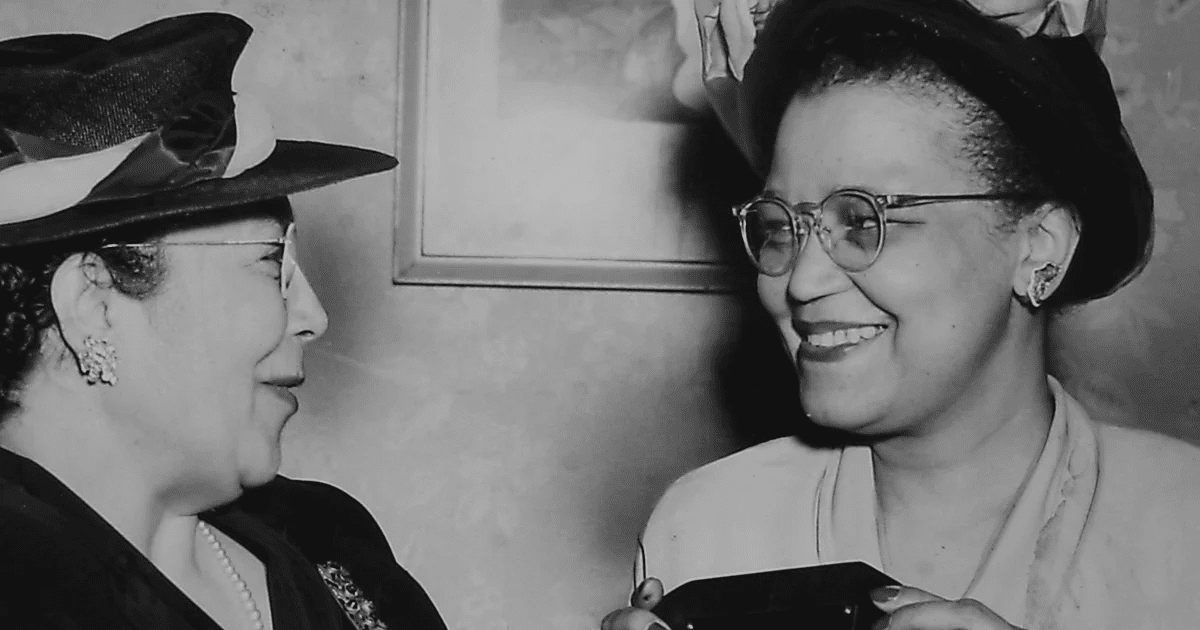
While still a master’s student, Sadie Mossell had joined the fight for women’s rights. In 1919, she was elected the first national president of the Delta Sigma Theta Sorority. She later became its legal advisor. Sadie had been connected with the sorority since 1915, when she first started at the University of Pennsylvania. However, establishing a chapter required five students, which only became possible in 1918.
All existing chapters gathered for the first time at a convention at Howard University in 1919. Mossell’s uncle, Lewis Baxter Moore, still worked there and provided his office for the sorority’s meetings. During this convention, the sorority’s Grand Chapter was established. It later expanded its activities across the country and became widely known. Sadie Mossell was one of its most active representatives, establishing the national “May Week” program as part of the fight for women’s rights.
Sadie’s views are documented in the University of Pennsylvania archives. In 1921, while working on her dissertation, The Standard of Living Among One Hundred Negro Migrant Families in Philadelphia, she detailed the economic conditions of African Americans and the obstacles to their advancement. Her conclusions contradicted the prevailing view that Black poverty was due to personal shortcomings. In 1930, Sadie published the article “Negro Women in Our Economic Life,” in which she advocated for the employment of African American women.
A Woman in Law: Education and Career
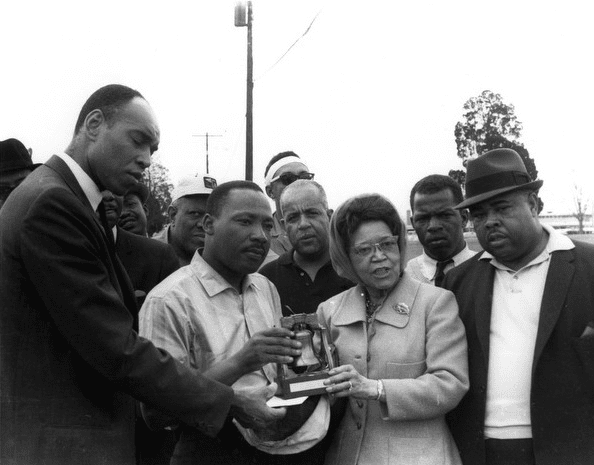
In 1923, Sadie married Raymond Pace Alexander and returned with him to her native Philadelphia. At the time, several educational institutions for African Americans offered her jobs, but they were all far from the city. Sadie decided to stay close to her family and did volunteer work. A year later, she decided to apply to the University of Pennsylvania Law School.
She was successful and became the first African American woman admitted to the law school. Once again, she faced restrictions and prohibitions. She overcame all obstacles with fortitude and earned the respect and recognition of her fellow students. In 1927, she earned her law degree and became the first African American woman admitted to the Pennsylvania Bar.
Sadie Mossell Alexander practiced law until 1982. Initially, she became a partner with her husband, specializing in estate and family law. They were both also active in defending the civil rights of African Americans and women.
In 1928, Sadie Alexander was appointed Assistant City Solicitor of Philadelphia. She held this position for two years and again from 1934 to 1938. From 1943 to 1947, Alexander served as the secretary of the National Bar Association, the first time a woman was appointed to this role.
From 1952 to 1968, she served on the Philadelphia Commission on Human Relations. In 1959, when her husband became a Court of Common Pleas judge, Sadie Alexander opened her own law firm. She ran her own practice until 1974, when her husband passed away. Two years later, she became counsel to the firm of Atkinson, Myers, and Archie, where she worked until her retirement.
Personal Life
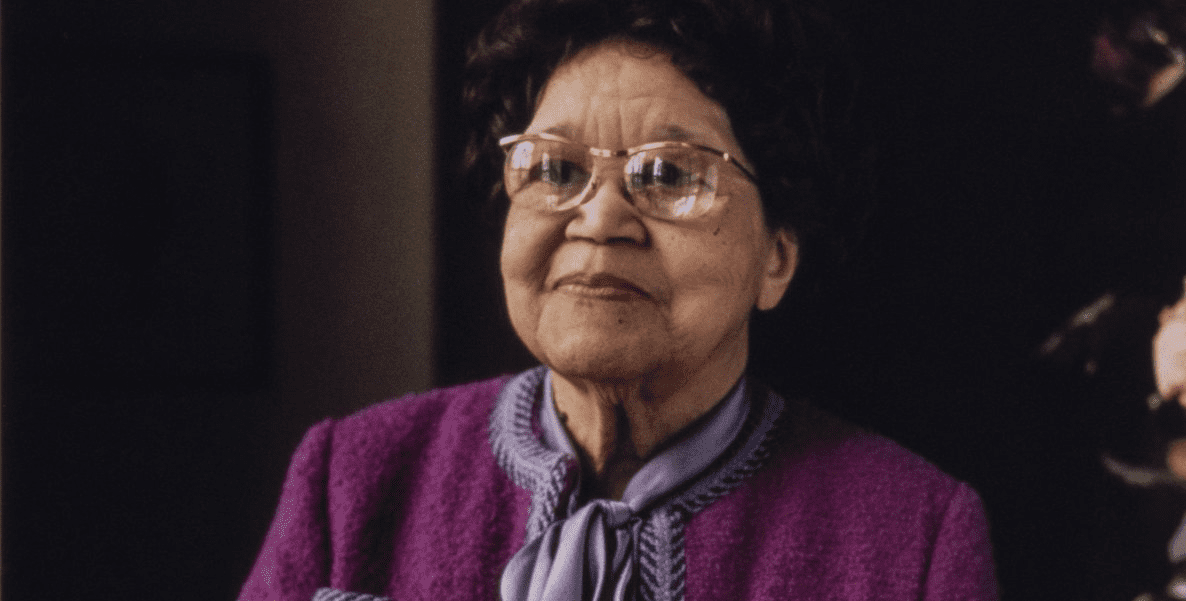
In 1923, Sadie Tanner Mossell married Raymond Pace Alexander. The wedding ceremony was performed by the bride’s father at their home in Philadelphia. Alexander had also grown up in the city. His parents had been enslaved, but he was born free. He attended Central High School and graduated from the University of Pennsylvania’s Wharton School and Harvard Law School. He opened his own law practice immediately after marrying Sadie.
Sadie and Raymond had four children, but only two survived. Their daughter, Mary Elizabeth Alexander, married Melvin Brown. Their daughter, Rae Pace Alexander, earned a Ph.D. and married Archie C. Epps III. After divorcing him, she married Thomas Minter and had two sons.
Sadie Mossell Alexander passed away on November 1, 1989, in Philadelphia. The cause of death was pneumonia, a complication of Alzheimer’s disease. The distinguished woman was buried at West Laurel Hill Cemetery.