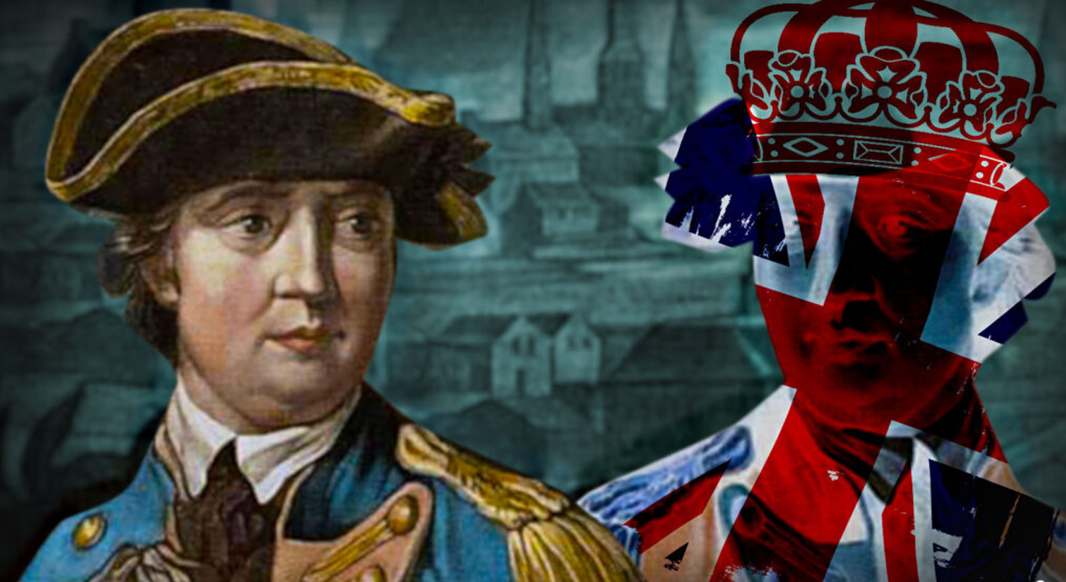

Below, on philadelphiayes, we dive into one of the most infamous and consequential events in the history of the American Revolution (1775–1783): the despicable betrayal by Benedict Arnold. The story of this officer, who transformed into a military criminal, is deeply intertwined with Philadelphia. It was right here, in the cultural and political heart of the nascent United States, that his personal drama began—a drama that led to a national humiliation. Arnold’s journey from war hero to the very symbol of defection was witnessed by the city itself.
The Hero Who Took the Administrator’s Chair
At the beginning of the Revolutionary War, Benedict Arnold demonstrated exceptional bravery and remarkable strategic flair. His brilliant successes, especially at the Battle of Saratoga (1777), where he played a decisive role, made him a national icon and one of the Continental Army’s most celebrated generals.
However, a serious wound sustained on the front line forced him to permanently step away from active combat. In 1778, following the successful expulsion of British occupiers from Philadelphia, George Washington appointed Arnold military commandant of the liberated city. This was a high administrative honor and a way to ensure the wounded hero could continue to serve.
But this appointment proved fatal to his reputation. Unlike the military camp, Philadelphia—an economic and political hub—exposed Arnold to commercial temptations and political scheming. Instead of heroic victories, he plunged into a world of luxury, speculation, and debt, leading to accusations of corruption and marking the beginning of his journey toward ignominious treason.
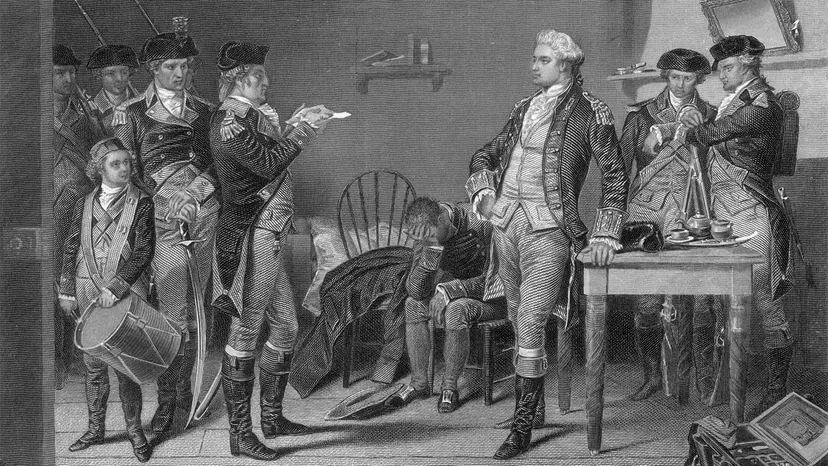
Extravagance, Financial Ruin, and the First Signs of Shame
Philadelphia quickly sucked the newly appointed administrator into a whirlpool of high society, which quickly became a financial trap. The commandant, who had grown up in modest circumstances, fiercely desired the elite status and recognition in high society that his military feats had earned him.
Arnold began living an exorbitantly luxurious lifestyle, utterly inconsistent with his modest military salary. He rented an expensive mansion and hosted lavish balls and events. This quickly resulted in massive financial problems and mounting debts. To cover his expenses, he resorted to questionable commercial transactions, exploiting his official position. This, in turn, triggered the initial accusations of corruption and the first hints of suspicion.
Cherchez la Femme
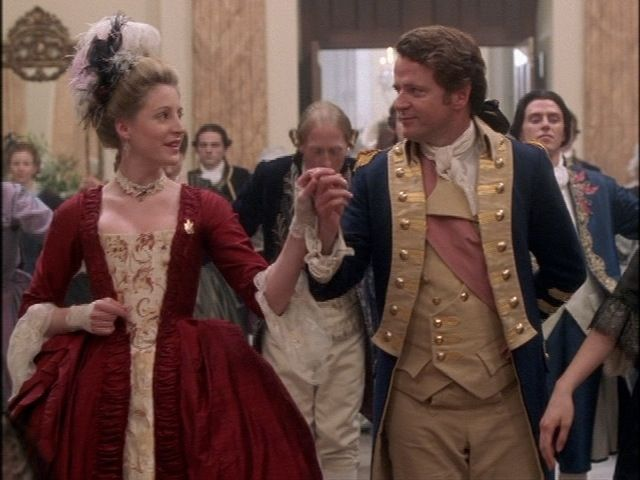
The situation for Benedict Arnold reached a critical point after his marriage to Peggy Shippen. This union was more than just a social alliance; it was a politically charged event that ultimately created the perfect conditions for his betrayal.
Peggy was the daughter of an influential Loyalist family in Philadelphia who had maintained close ties with the British elite during the occupation. Her family openly held anti-Revolutionary sentiments, which was an open secret in the city’s highest circles.
The influence of his wife and her new social circle—which was predominantly pro-British—became key factors in the general’s subsequent downfall. This environment not only fueled his financial ambitions and desire to live beyond his means but also established a direct and convenient channel for communication with the British espionage apparatus. In fact, it was Peggy, through her connections, who served as the intermediary between Arnold and Major John André, the Chief of Intelligence for the British Army, ultimately leading to his final defection to the enemy.
The Spiral of Corruption and a Chance for Salvation
The desperate need to quickly cover his growing debts pushed Arnold into blatant abuses of power during his time as commandant in Philadelphia. The war hero transformed into a corrupt official. He shamelessly exploited his position for personal commercial ventures, including the illegal movement of goods from military warehouses and manipulating property confiscated from Loyalists.
These audacious actions provoked outrage among local leaders and the political elite. His political enemies, notably the influential Joseph Reed, fiercely brought eight charges against him for misconduct and breach of official ethics.
A military court-martial was held in 1779. Although the court acquitted Arnold on most counts due to his past service, he still received a formal and severe reprimand from George Washington himself. This public humiliation in front of the entire army and the political establishment was the final straw in his growing bitterness and profound disappointment with the cause of the Republic. It set the stage for negotiations to switch sides to the British.
The Price of Treason
Feeling deeply undervalued and wronged after the public reprimand, Benedict Arnold finally decided to take revenge on the Continental Army and simultaneously solve his immense financial problems in one radical move.
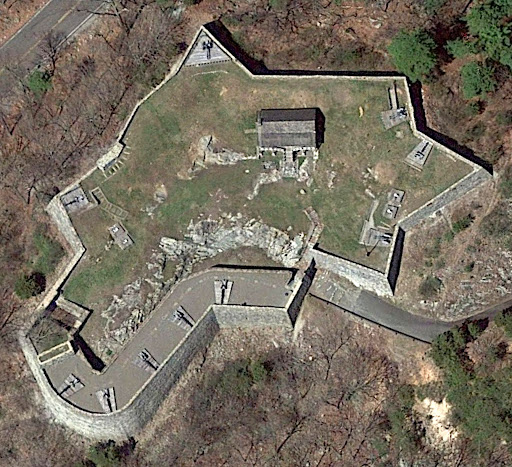
In 1780, he secured the command of West Point Fortress on the Hudson River. This location was more than just a garrison; it was the most vital strategic asset for the Americans. West Point controlled river navigation and prevented the separation of the New England states from the rest of the colonies—a key to victory.
Once he gained control of this crucial point, Arnold secretly established contact with British Major John André, General Clinton’s Chief of Intelligence. For his treason, the officer demanded an incredibly high price: approximately 20,000 pounds sterling and a promise to receive a high-ranking generalship in the British Army. By the standards of the time, this was a colossal sum. In exchange, he agreed to surrender West Point and its garrison to the enemy, an act that could have led to the defeat of the American cause.
The Plot Unravels
The secret agreement between the British opponents and the renegade Benedict Arnold was exposed entirely by chance, saving the American Revolution.
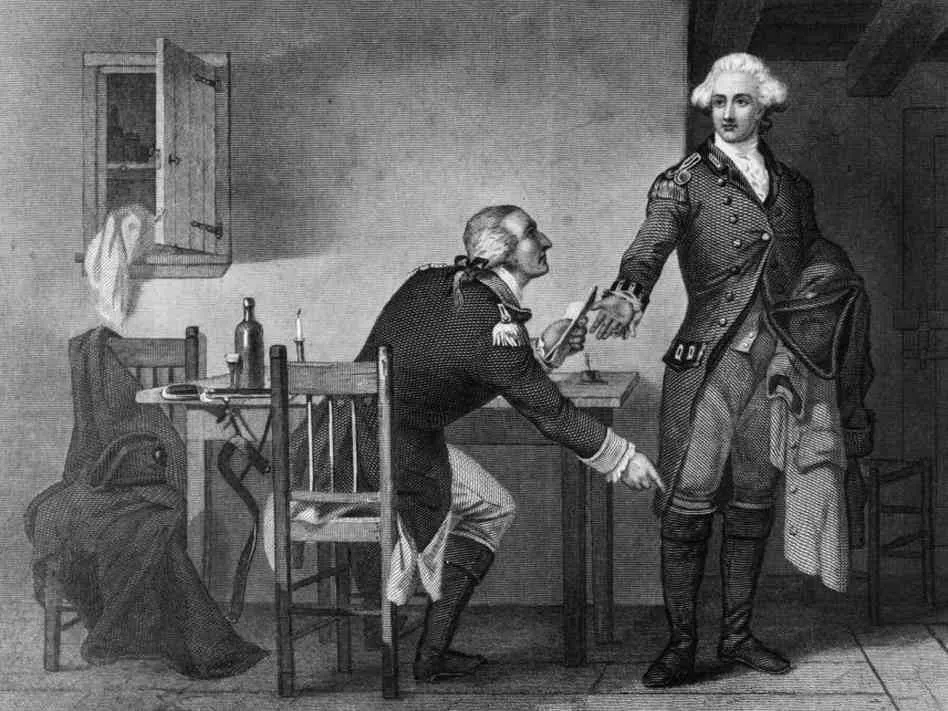
The key moment came on September 23, 1780. American patrols detained British Major John André—Arnold’s direct accomplice—near West Point. The officer, who was carrying sensitive information, had compromising documents he attempted to hide in his boot.
These proofs were irrefutable and included:
- Drawings of West Point’s fortifications.
- A detailed plan for surrendering the fortress’s key positions to the British forces.
Arnold received word of his accomplice’s arrest just minutes before George Washington’s arrival at West Point. Realizing he was exposed, he immediately fled, abandoning his wife and the city. Arnold successfully defected to the Royal forces, receiving his promised post as a brigadier general in the British Army. His subsequent military service for Great Britain during the war permanently cemented his status as a national anti-hero and one of the most disgraceful traitors in United States history. As for André, he was later hanged as a spy.
A Symbol of Betrayal
The name Benedict Arnold is forever etched into American culture as a synonym for military treason and defection. His story is a profound moral lesson on how ambition, financial hardship, and a sense of grievance can outweigh patriotic duty.
Philadelphia, the site of his greatest military triumph as a war hero and simultaneously his greatest moral fall as a corrupt commandant, is associated with the start of his moral decay. It was in this city, amidst luxury and political intrigue, that the brave warrior transformed into a cynical traitor. His story became part of the national myth, serving as a constant reminder of the price of corruption and perfidy.The story of Benedict Arnold is a bitter paradox of the American Revolution. It demonstrates that the highest merits on the battlefield cannot always withstand the pressure of personal weaknesses and financial temptations. Philadelphia, which witnessed the signing of the Declaration of Independence and the birth of the Republic, also saw one of its most distinguished generals choose the path of shame. This case confirms that the success of the new nation required not only military victories but also the unwavering moral integrity of its leaders.