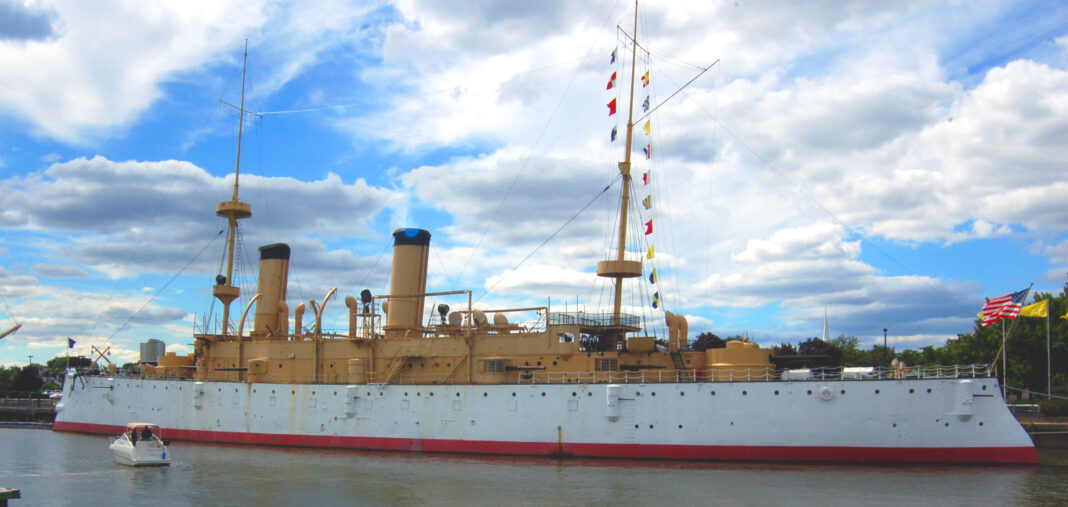

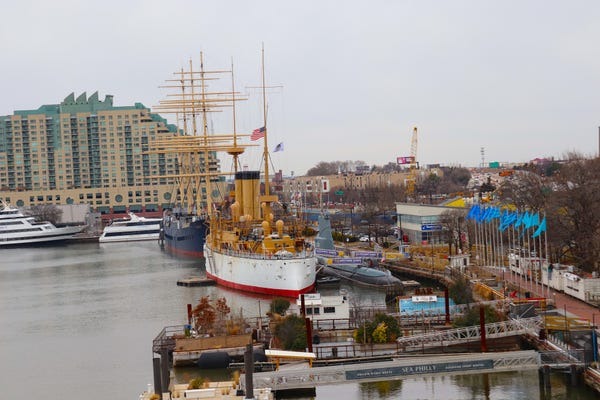
In the waters of Philadelphia, near the historic shipyard, stands not just an old vessel, but a living relic—the cruiser USS Olympia. Launched in 1892, this powerful warship embodies the peak of American naval might at the turn of the century and became a national icon thanks to just one phrase uttered in the heat of battle.
The Olympia is a true veteran ship, a witness to the fleet’s transition from the age of sails to steel battleships. It was from her bridge that Admiral George Dewey spoke his legendary command. This order, given during the 1898 Battle of Manila Bay, signaled the U.S. triumph over Spain and transformed the nation into a global power.
But how did a cruiser that became a symbol of imperial ambition survive to the present day? Why did Philadelphia, rather than another port city, become its eternal sanctuary, and what secrets do its steel decks hold, having witnessed not only battles but also the return of the Unknown Soldier’s Body? This is the story of a steel legend frozen forever in time. We explore the details on philadelphiayes.
The Birth of a Steel Legend
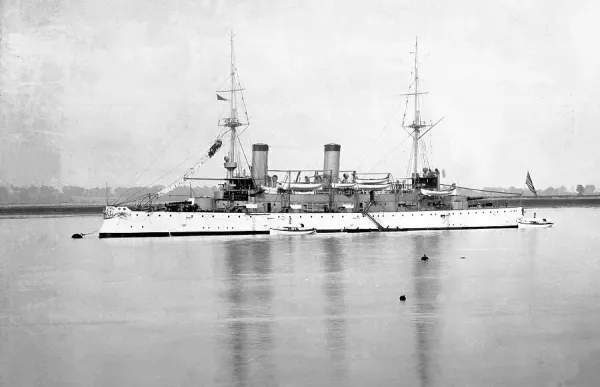
The creation of the USS Olympia was part of a large-scale, strategic program by the United States to modernize its naval forces after a long period of stagnation following the Civil War. In the late 1880s, as the American fleet was making a fundamental transition from old wooden vessels to all-steel armored units, the Olympia became a true model of a new-generation scout cruiser.
Its design combined two critically important elements: excellent speed and powerful artillery armament, necessary for dominating the seas. The main striking power came from four 8-inch guns, housed in two turrets. Launched in 1892, the ship embodied the technological breakthrough of American engineering at the time. It was one of the first vessels with a modern armored deck, providing vital protection, and an efficient propulsion system. Its purpose was clear: to lead fast-moving groups and participate in open-sea combat, symbolizing a new era of American naval aggression and expansion.
The Battle of Manila
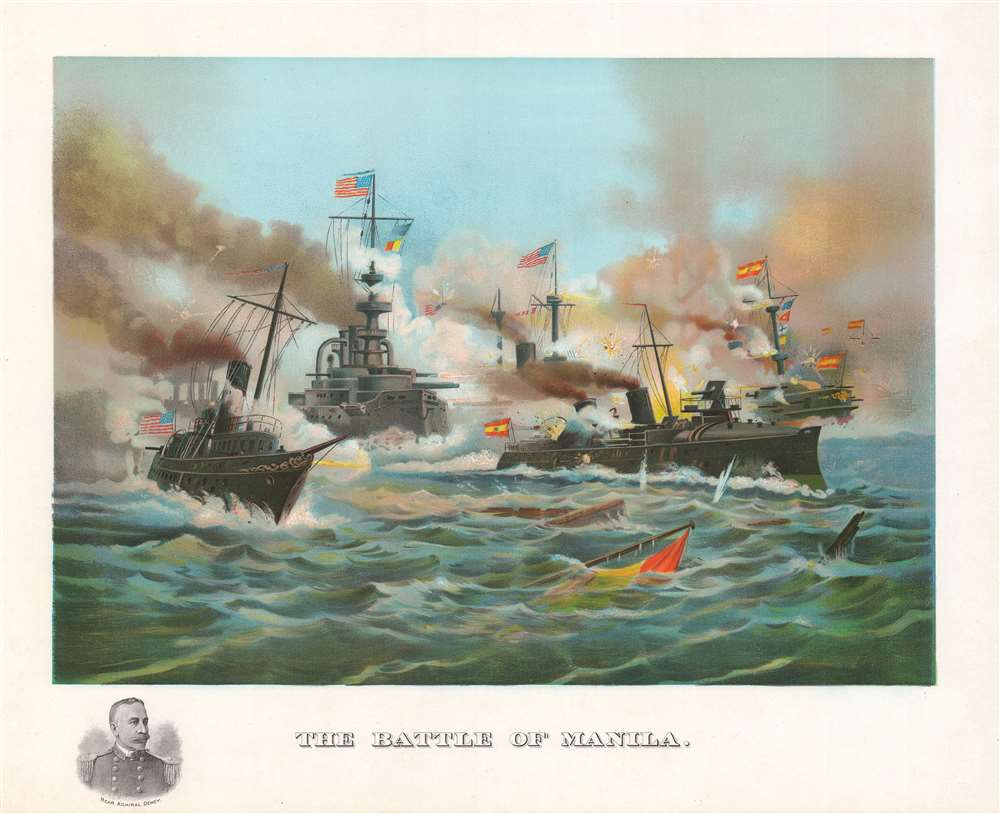
The USS Olympia gained its greatest, truly national fame on May 1, 1898, during the key Spanish-American War. In the fateful Battle of Manila Bay, in the Philippines, she served as the flagship of the Asiatic Squadron commanded by Commodore George Dewey.
This was the moment that forever etched the ship into history. It was from the Olympia’s deck that Dewey, maintaining an unruffled composure, spoke his famous, succinct phrase that became a symbol of American resolve: “You may fire when ready, Gridley.”
The battle lasted only a few hours and ended in a complete and devastating rout of the Spanish fleet, despite the Spaniards occupying fortified positions. The victorious fight at Manila not only instantly made Dewey a national hero and admiral but also immediately transformed the cruiser Olympia into a national symbol of undeniable American military might. The success of this operation marked the entry of the United States onto the stage of world politics as a major naval power influencing the destinies of distant continents.
Historic Mission
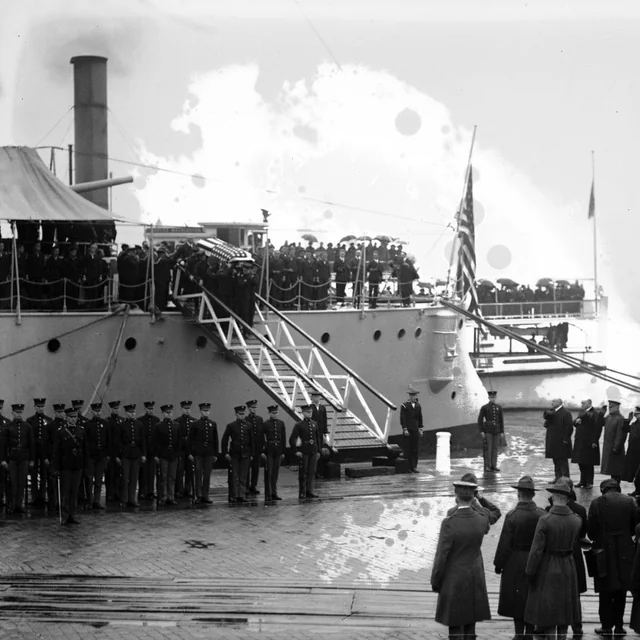
After concluding her active combat service, the ship carried out one last mission of exceptional importance that underscored her epochal place in history. Following the end of World War I in 1921, the cruiser Olympia was chosen to transport the Body of the Unknown Soldier from France back to the United States. This solemn voyage became an act of national tribute to the memory of all Americans who died in the Great War. She delivered the defender’s remains home, where he was interred at Arlington National Cemetery. Thus, the ship concluded its military biography as a participant in a symbolic ceremony of the nation bidding farewell to its heroes.
The Veteran’s Eternal Sanctuary
Following this solemn mission, the cruiser, having served its time, was decommissioned. In 1922, she was moored in Philadelphia, and in 1957, she received official museum status, beginning her new life as a monument.
The decision to keep the Olympia here was significant, as Philadelphia, as we know, is the cradle of the American Navy. This choice emphasized the continuity of the city’s maritime history. Thanks to the monumental efforts of Philadelphia enthusiasts and the Historical Landmarks Society, the Olympia was restored and opened to the public.
Visitors today can see not only the combat stations and Admiral Dewey’s bridge but can also genuinely feel the atmosphere of sea life at the end of the 19th century. However, maintaining such an old steel vessel requires colossal resources due to constant corrosion and the aggressive impact of the river environment. Therefore, the cruiser remains a subject of constant attention and requires significant support from public organizations fighting to preserve this national symbol for future generations.
The Legacy and Future of a Unique Relic
The cruiser USS Olympia is considered a national treasure and is the world’s only surviving warship of that era. Its uniqueness attracts historians, military experts, and ordinary tourists. The exhibit helps visitors understand the technological development of naval engineering and the social conditions of sailors’ lives at the turn of the century. This floating museum is vivid proof of the military history of the United States.
- It holds the status of a National Historic Landmark.
- It was the first ship to use telephone communication on the bridge for battle control.
Despite financial difficulties that have threatened it with sinking or dismantling, the Philadelphia historical community continues to fight for its preservation, emphasizing its undying significance to American history.
Key Facts About the USS Olympia
| Parameter | Value / Details | Historical Context |
| Class / Type | Protected Cruiser. | One of the first new-generation steel cruisers in the US Navy. |
| Construction | Launched in 1892. | The start of United States naval modernization. |
| Main Victory | Battle of Manila Bay, 1898. | Decisive victory in the Spanish-American War: the beginning of American dominance. |
| Symbolic Mission | Transporting the Unknown Soldier (1921). | An act of tribute to the memory of those who died in World War I. |
| Status in Philadelphia | National Historic Landmark, museum ship. | The only surviving cruiser of its era, preserved since 1922. |
The Eternal Sentinel
The USS Olympia is not just an exhibit in a Philadelphia dry dock; it is the embodiment of American naval destiny. Born as a cutting-edge steel model at the end of the 19th century, it quickly transformed into a national symbol.
Philadelphia became its worthy sanctuary. Here, after completing its last solemn mission, the Olympia stands as a living reminder of a glorious past. The ship, which survived the era of imperial expansion and World War II, requires a constant struggle for its preservation. It is an iron legend forever standing guard, symbolizing America’s transition from a regional power to a world leader.