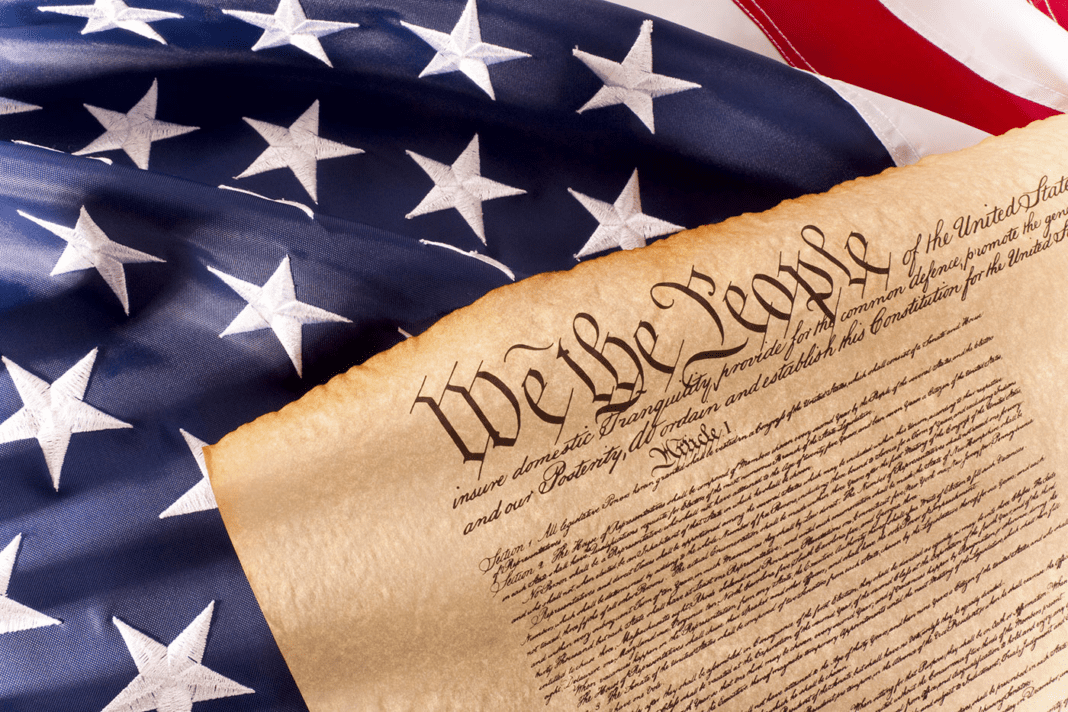

The U.S. Constitution is the first document of its kind in the world, having been approved on September 17, 1787. This historic event took place in Philadelphia, where the Constitutional Convention reviewed the Articles of Confederation and debated the content and provisions of the supreme law of the land. After the Constitution was signed, the union of independent states became a federal nation with a president as head of state and commander-in-chief of the armed forces, Congress assumed legislative power, and the Supreme Court took on judicial power. We explore more about the creation of the U.S. Constitution in this article at philadelphiayes.
Prelude to the Philadelphia Convention
After the signing of the U.S. Declaration of Independence during the Second Continental Congress in 1776, 13 American states became independent. This event, incidentally, also took place in Philadelphia. The governing law for these states was the Articles of Confederation, which were adopted at the same time.
The first federal government operated under these Articles. However, its weakness and inability to resolve conflicts that arose between the states quickly became apparent. Furthermore, the government needed broader powers, such as the authority to collect taxes. It found itself financially dependent on the states, which only complicated the situation.
To address these shortcomings and develop a common strategy for moving forward, a conference was held in the early fall of 1786 in Annapolis, Maryland. Delegates from only five states attended: New Jersey, New York, Pennsylvania, Virginia, and Delaware. Of course, this level of representation was not sufficient to resolve national issues. Instead, the delegates decided to convene a convention in Philadelphia, scheduling it for May 1787.
The Philadelphia Convention
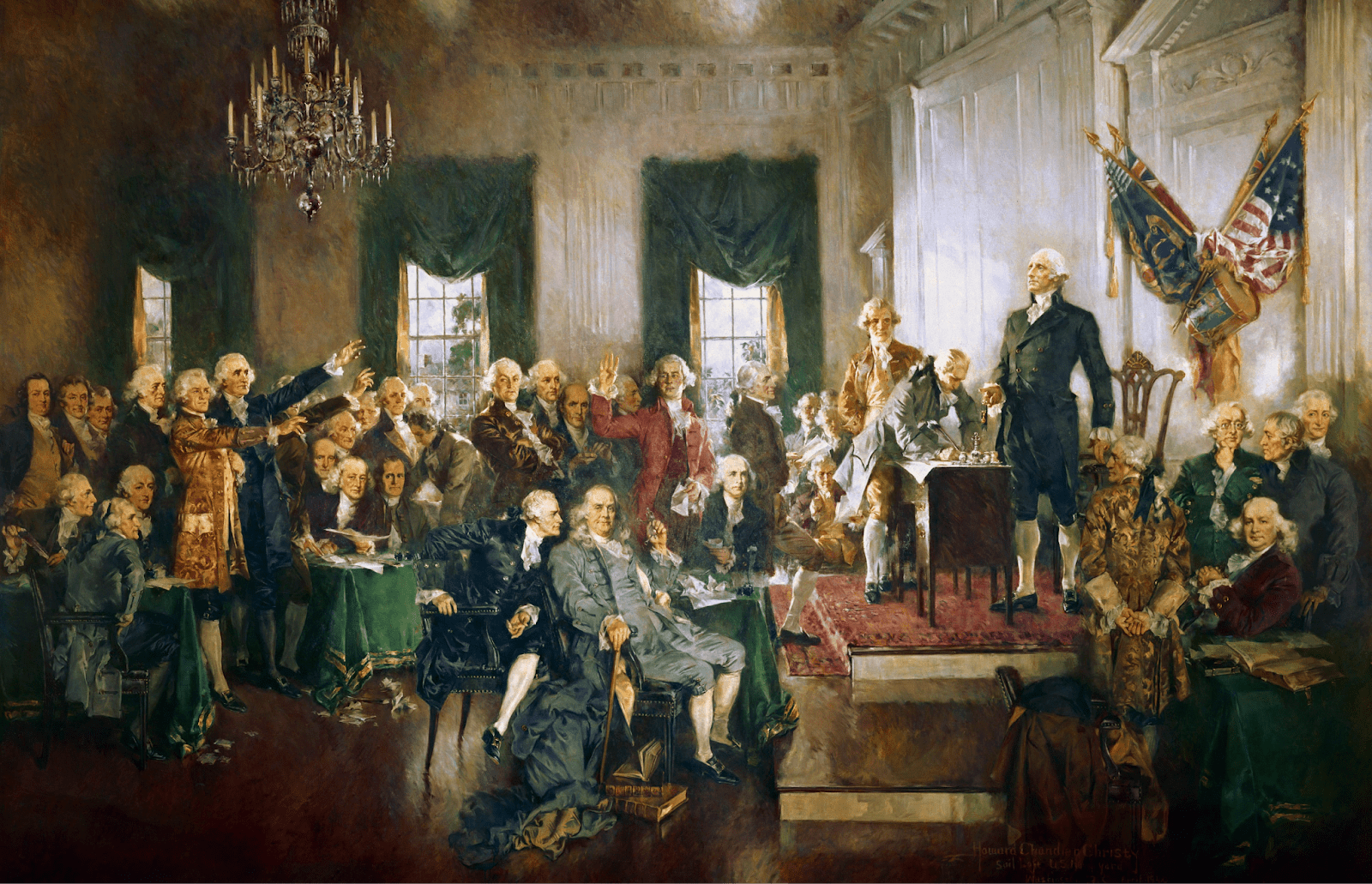
The independent states prepared for the Philadelphia Convention. Twelve states selected 74 delegates to participate in the event. Only Rhode Island refused to take part and send representatives to Philadelphia. The Convention was scheduled to begin on May 14. However, long-distance travel in those days was difficult and unpredictable, so most delegates did not arrive in the city by that date. A quorum of representatives from seven states was finally achieved on May 25, and eventually, 55 delegates gathered.
It is worth noting that most of the Founding Fathers participated in this event. George Washington presided over the assembly. Thomas Jefferson and John Adams were notable absentees.
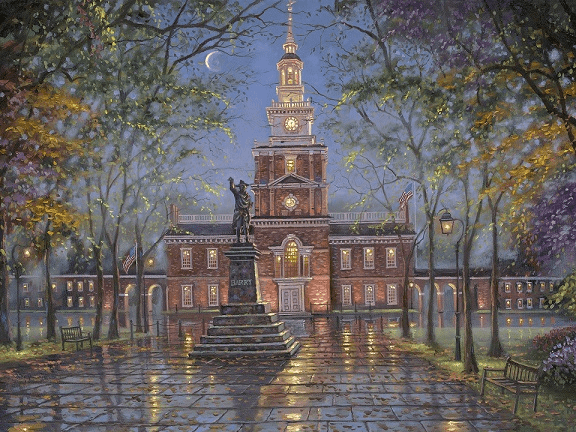
The event took place in the building now known as Independence Hall, a UNESCO World Heritage site. Its historical significance can hardly be overstated, as it was the scene of the following events:
- From 1775 to 1783, this building was the primary meeting place for the Second Continental Congress.
- It was at Independence Hall in 1775 that the Continental Congress appointed George Washington as commander of the army and Benjamin Franklin as Postmaster General.
- The Declaration of Independence was approved in this building on July 4, 1776, and was then read aloud to the public in the square outside.
So, it is no surprise that the debates over the Constitution and its signing also took place in this historic building, which witnessed the birth of U.S. independence.
Debates and the Signing of the Constitution
The signing of the Constitution was preceded by discussions of its main provisions, especially those that were contentious and a source of disagreement. One of the main topics of debate was the issue of representation in Congress. States with larger populations favored proportional representation, while those with fewer citizens argued for equal representation.
After lengthy discussions, a compromise was reached. It was decided to make Congress bicameral. The lower house (the House of Representatives) would have proportional representation, and the upper house (the Senate) would have equal representation. This decision was approved by 38 of the 41 delegates present.
The Constitution was signed on September 17, 1787, but its ratification by the states continued after this stage. Pennsylvania, New Jersey, Delaware, Georgia, and Connecticut were among the first to approve the document. The Constitution went into effect when 9 of the 13 states had ratified it. Meanwhile, Massachusetts, for example, refused to ratify the document because it did not protect freedom of speech, the press, and religion.
A compromise on this issue was reached in February 1788. It was agreed that necessary amendments would be adopted during the first session of Congress. The Bill of Rights, which included 12 amendments to the document, was approved in September 1789. Rhode Island was the last to ratify this version in May 1790, becoming the 13th state in the USA.
Of course, this was only the beginning of the journey, as new government bodies needed to be created and regulated. Moreover, the country had recently emerged from a war, so work was needed on many fronts at once. With unanimous support, George Washington became the first president and led these processes. In the 21st century, we must acknowledge that the adoption of the new Constitution worked, as did the idea of U.S. independence, and Philadelphia was the epicenter where these historic events came to life.