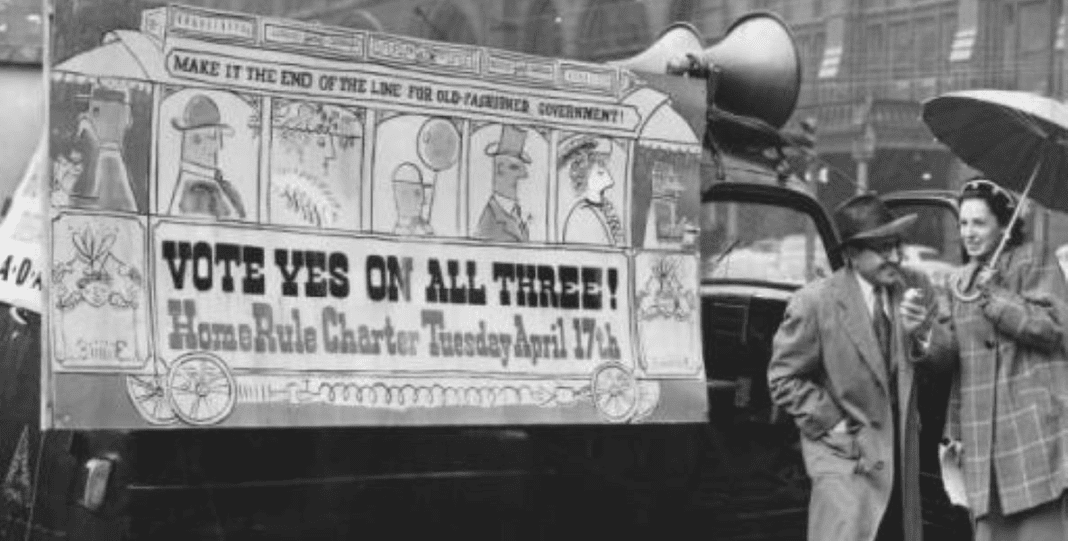

In April 1951, citizens approved Philadelphia’s new charter, which led to municipal elections in November of the same year. For the first time in history, the Democrats won a landslide victory and have dominated Philadelphia politics ever since. The elections included races for mayor, district attorney, and city council members. A referendum to consolidate the city and county governments was also held. We’ll tell you more about these events at philadelphiayes.
Philadelphia’s Political Landscape in the Mid-20th Century
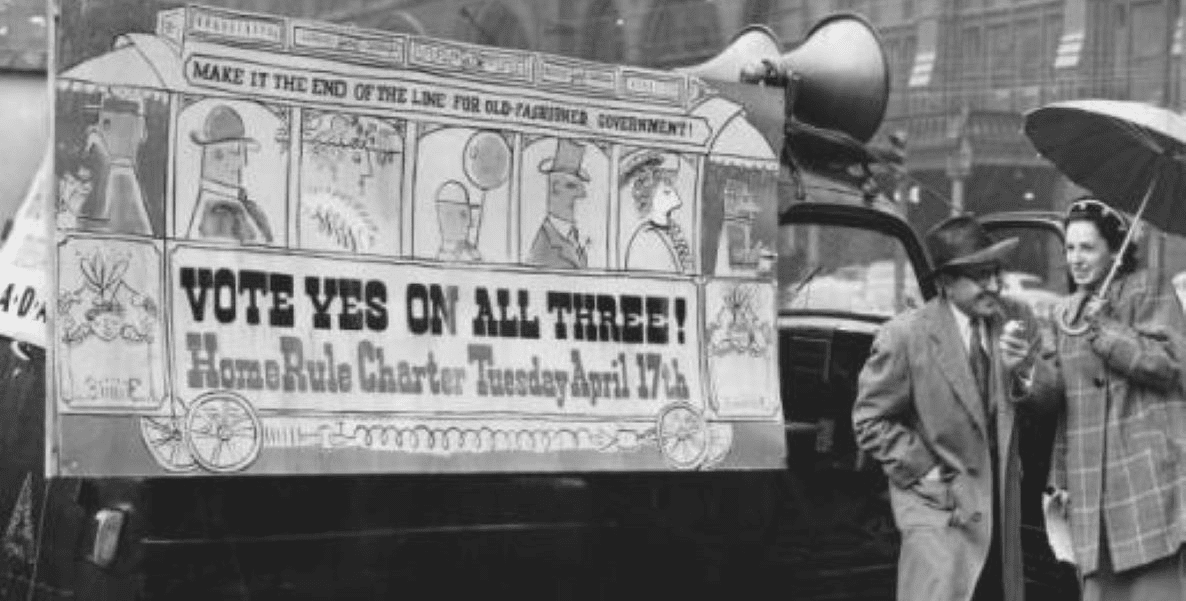
Throughout the 1940s, Philadelphia was the only major U.S. city where Republicans dominated politics. Mayor Bernard Samuel and Sheriff Austin Meehan, for example, belonged to the party and were supported by prominent city businessmen. The Republicans once again won the election in 1947.
However, public dissatisfaction with their policies began to grow. At the same time, reformers emerged from within the Republican ranks. They began to align with the Democrats, and this coalition won the 1949 election. Following that victory, corruption was exposed in the city government, and in 1950, a new city charter was proposed. It was designed to transfer most of the power from the city council to the mayor and to initiate civil service reform. The proposal suggested that the mayor could directly appoint officials to higher executive positions without city council approval. Voters approved these proposals in a referendum in April 1951, and the next step was a city-wide election.
The 1951 Philadelphia Mayoral Election
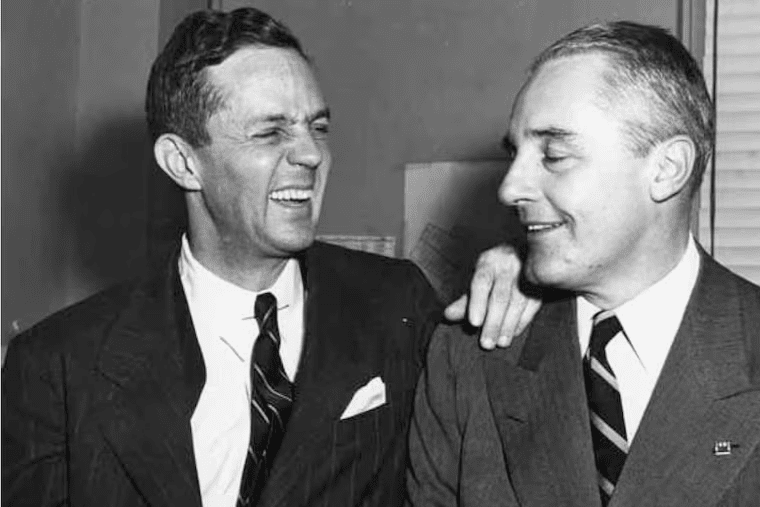
Bernard Samuel chose not to run for re-election. The Republican candidate became Daniel A. Poling, while the Democrats nominated Joseph S. Clark Jr.
Daniel Poling was a Baptist preacher and had a reputation as an honest man. He worked for various charities and led the “Christian Herald” publication. His son, Clark V. Poling, was a chaplain who died during World War II.
Joseph Clark Jr. was a lawyer and a U.S. Army officer who served in World War II. His family was Republican, but Joseph changed his political views to favor the Democrats in 1928. He had run for office in Philadelphia several times. He eventually became Deputy Attorney General of Pennsylvania. In 1949, he was elected as City Controller to fight corruption. Over the next two years, Clark actively investigated bribery and theft in Bernard Samuel’s administration and exposed many crimes. He also called for the new city charter to be adopted.
Joseph Clark Jr. focused his campaign on the corruption within the Republican Party. He promised to implement large-scale reforms and solve the problem. Daniel Poling did not deny the existence of corruption and also promised voters he would eradicate it.
The prominent Philadelphia newspapers, the “Inquirer” and the “Bulletin,” initially supported the Republicans but quickly switched to the Democrats. The newspapers wrote that only by getting rid of the Republicans could the situation at City Hall change. Joseph Clark Jr., along with his district attorney candidate Richardson Dilworth, bought time on the radio and spoke on the streets, detailing all the Republican Party’s crimes.
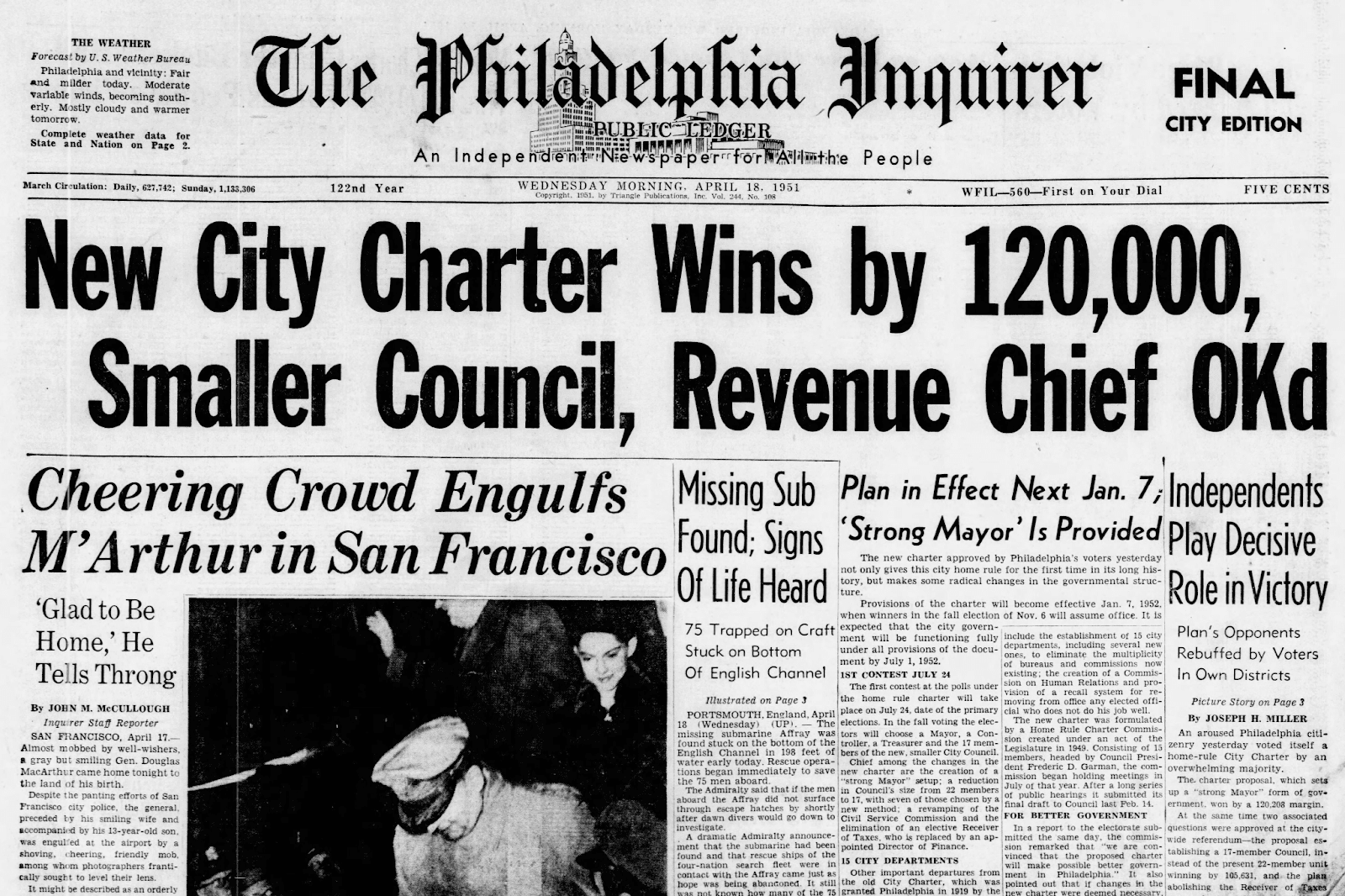
As a result, the election was a victory for him. He won by a margin of over 120,000 votes. The Democrats were most successful in the so-called “independent districts” populated by middle-class voters, and in the predominantly African American districts in North and West Philadelphia.
This was the first time a Democrat had won the mayoral office since 1881. Furthermore, it was the first time since 1911 that a Republican candidate had lost the election. This was the start of the era of Democratic dominance in Philadelphia politics, which continues into the 21st century.
Other Aspects of the 1951 Elections
In parallel with the mayoral race, the 1951 Philadelphia elections also included races for district attorney, city council members, and city commissioners.
The candidates for district attorney were Democrat Richardson Dilworth and Republican Michael A. Foley. Dilworth had previously been a Republican but became a reform advocate and later switched to the Democratic Party. He ran for mayor in 1947, and interestingly, Joseph Clark Jr. led his campaign. In 1949, Richardson Dilworth became the city treasurer. Democratic Party leaders had planned to nominate him for mayor in the 1951 election. However, after Joseph Clark Jr.’s nomination, Dilworth decided to run for district attorney instead.
As for his opponent, Michael Foley was an attorney for the Insurance Company of North America and had organizational support. However, Dilworth’s active campaign brought him a victory by a large margin, with just under 58% of the vote.
In accordance with the new charter, Philadelphians also elected the City Council that year. The council was to consist of 17 members:
- ten of them were to be representatives of city districts,
- the rest were elected at large,
- each political party could nominate 5 candidates,
- and voters could only vote for five.
Thus, the majority party had the opportunity to win 5 out of 7 seats, with 2 seats reserved for the minority party. The Democrats’ triumph continued at this stage. They won in nine of the ten districts and secured a decisive majority of 5 out of 7 at-large seats.
Regarding the election of City Commissioners, each party nominated two candidates. The three best were to be elected. This position was at the county level and existed before the suburbs of Philadelphia were consolidated into a single city. The commissioners’ duties in the mid-20th century included conducting city elections and regulating the system of weights and measures. As in the other 1951 elections, the Democrats won. The elected officials were Maurice S. Osser and Thomas P. McHenry. McHenry was the incumbent commissioner and had held the position since 1945. Osser, on the other hand, was a newcomer. Before this, he had worked as a lawyer and led the 16th ward. The third place went to Republican Walter E. Davidson, who had previously worked as a sales manager.
The Consequences of the 1951 Elections for Philadelphia
The elections in Philadelphia in 1951 were a devastating blow to the city’s Republicans. Two years later, they managed to win a few minor seats on the city council, but the Republican organization continued to decline. The Democratic Party, by contrast, became dominant in the city’s politics—in the city council and in the mayor’s office. Following this, a conflict began on Philadelphia’s political stage between the reform-minded Democrats and those with more traditional views. By 1965, most of the reformers had left the government. The political culture then returned to more restrained and narrow views, which are also often criticized by voters and Republicans alike.
Regardless, 1951 was a pivotal moment for Philadelphia politics. No one expected such a sudden and complete change of the ruling party. However, the Democrats successfully used the favorable conditions to convince voters that they were the ones who would finally overcome corruption.