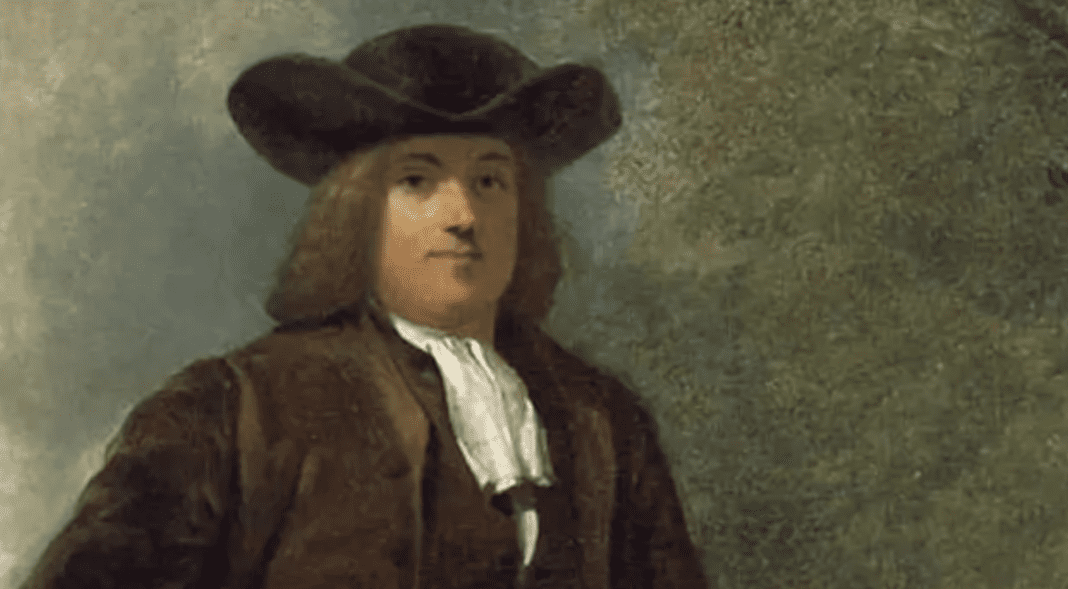

William Penn was a Quaker and a champion of democratic principles and religious freedom. In 17th-century England, such views were unpopular and led to persecution and even imprisonment. However, they found a home in the American colonies that William came to own. Penn founded Philadelphia and did much to develop Pennsylvania. Learn more about the life of this peacemaker in our article at philadelphiayes.
Early Life and Religious Ideas
William Penn was born on October 14, 1644, in London. His father was a renowned vice-admiral and a hero of many naval battles. For these successes, Penn Sr. received an estate in Ireland and a high rank. He also participated in the colonization of the West Indies, but after finding little success, the family returned to Ireland.
From childhood, Penn Jr. loved to read and was curious about everything happening around him. It was a time of emerging new religious and political ideas, which did not escape the notice of the inquisitive young man. He listened to missionaries and, from an early age, began to contemplate the justice of religion and its rules.
At 16, the young man enrolled at Oxford University. Students were required to attend chapel services at designated times, which William disliked. He tried to protest, but this led to his expulsion from the university. An angered father sent his son to France. However, William had no intention of mending his ways and only delved deeper into his ideas at a local Huguenot academy.
Upon returning home, he intended to study law, but the Great Plague of 1666 stood in his way. This time, his father sent William to the estate in Ireland, where he met Thomas Loe, a Quaker he had known before. This meeting solidified Penn’s views, and two years later, he was imprisoned for seven months for his religious beliefs.
During this imprisonment, Penn wrote his most famous work, No Cross, No Crown. William was arrested again in 1670 while protesting a law that banned public assembly. It is worth noting that Penn skillfully defended himself at trial, and the jury was able to reach an independent verdict. This was a landmark case that lawyers still cite today.
Moving to America and Realizing His Vision
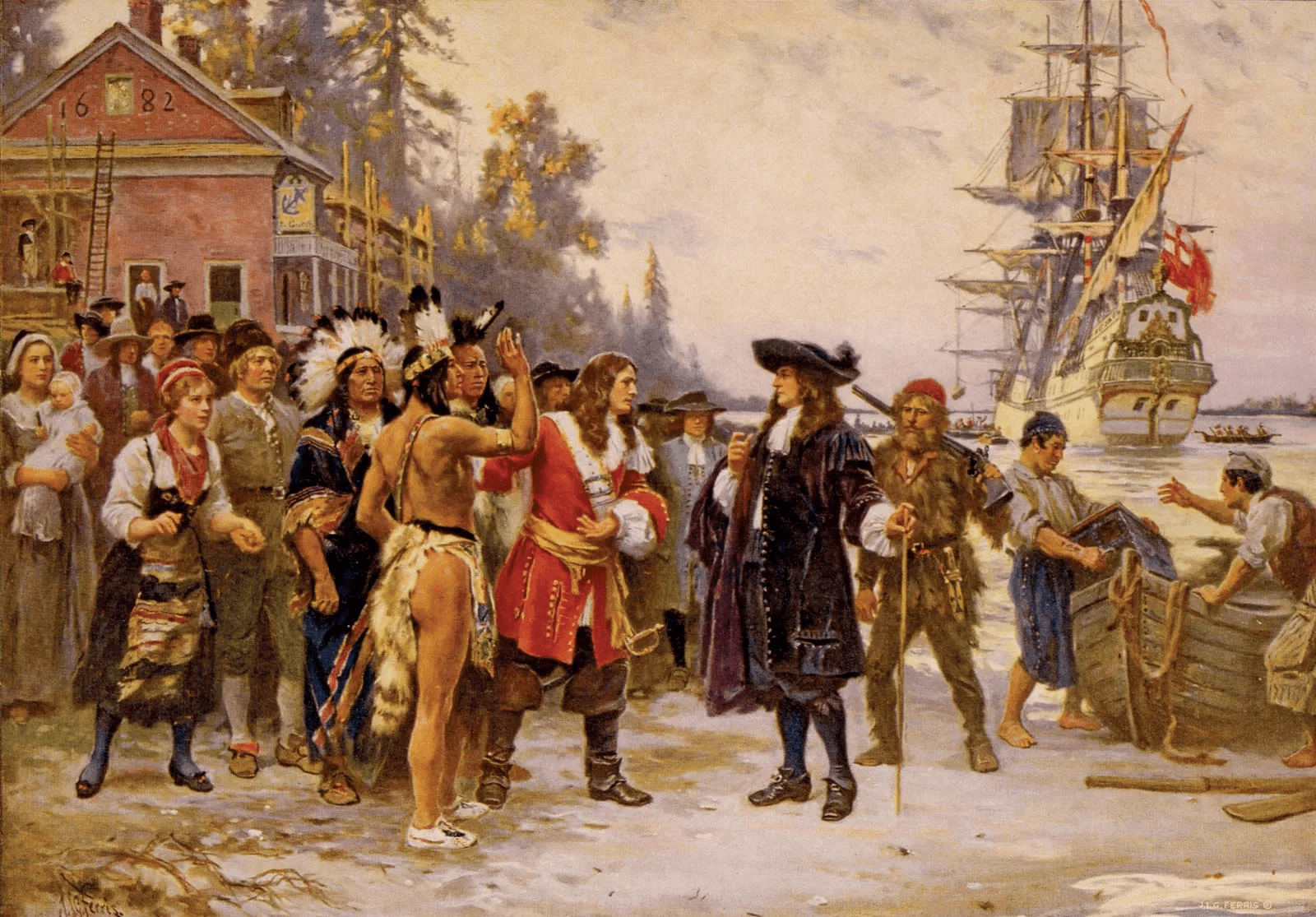
Penn’s ideas found no support in England, but fate had other plans for him. In 1670, his father died, having recently loaned the king £16,000. To settle this debt, King Charles II granted William a tract of land on the west bank of the Delaware River in faraway America in 1681.
By that time, William was already married to a Quaker’s daughter and eagerly accepted the offer. For him, it became a “holy experiment.” Penn believed that in the New World, he would have the opportunity to realize the Quaker ideals of equality, democracy, and religious freedom that contemporary Europe rejected. He decided to name his province “Sylvania,” but the king insisted on using the family name in honor of Penn Sr. Thus, the name “Pennsylvania” was formed.
As early as 1682, Penn arrived in the New World and settled in New Castle. At a general assembly, the colonists recognized his ownership rights. William traveled up the Delaware River and founded Philadelphia the following year. Interestingly, William respected the local Lenape people and was able to forge a peace treaty with them, as he did not want bloodshed.
Meanwhile, the English, Swedish, and Dutch settlers in the territory of modern-day Delaware were not pleased with the Quaker’s rule. They began a struggle for independence and, in 1704, formed a separate, semi-independent colony.
William Penn was a proponent of education for all people, freedom, and equal rights. During his time in America, he:
- Wrote a constitution for Pennsylvania that was so progressive it was used as a model by the framers of the U.S. Constitution.
- Developed a forward-thinking plan for a “United States of Europe.”
- Prevented witch hunts.
Thus, he managed to spread his ideas on a new continent, which would have a significant impact on the development of the United States.
Return to England
After two years in America, Penn returned to England. In 1684, Charles II died, and he was succeeded by James II, whom Penn knew well and was on friendly terms with. William had supported the future king during a succession crisis, even though he was a Catholic. This later contributed to the expansion of religious freedoms in England. In 1689, the Toleration Act was passed, which legalized other faiths.
In 1694, Penn’s first wife died. Seven children were born in this marriage, but five of them died very young. Two years later, William married for a second time. In 1699, the family traveled to America, intending to settle near Philadelphia. However, after two years, Penn returned to England due to financial difficulties. He was never fated to return to America.
William’s health deteriorated significantly during his time in England. In 1712, he suffered a stroke, which led to memory loss. The renowned thinker and political figure passed away in 1718, leaving behind a great legacy of progressive ideas and initiatives that continue to be realized even three centuries later.