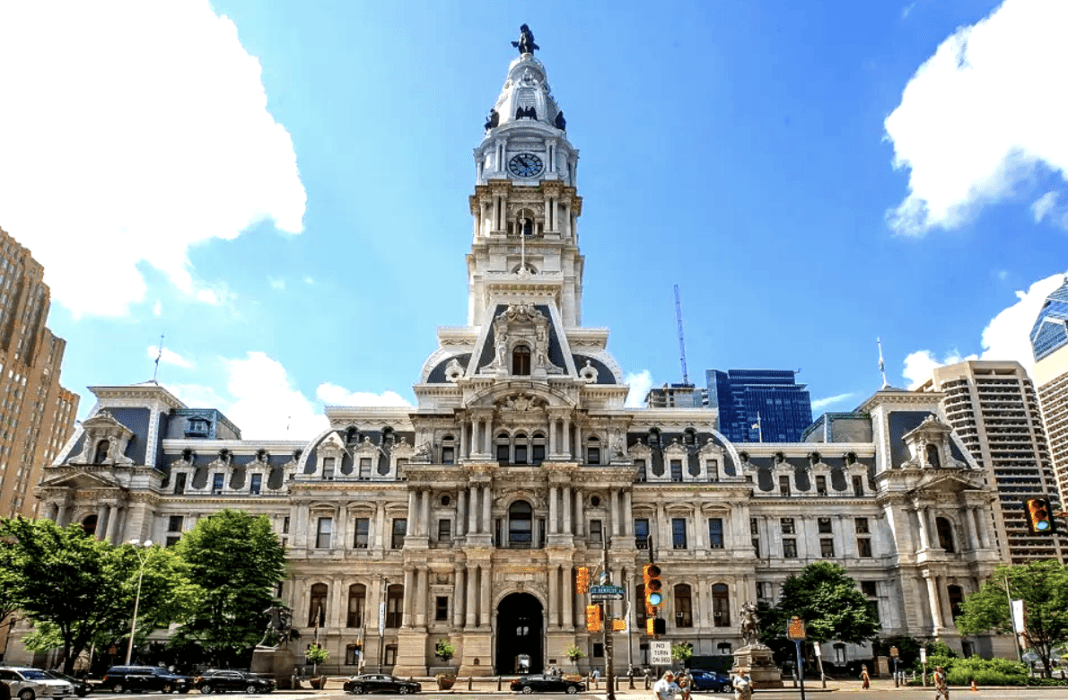

Philadelphia City Hall boasts more than a century of history, 14.5 acres, 88 million bricks and 250 sculptures, the most renowned of which is the statue of William Penn, the city’s founder, which adorns the pinnacle of the structure. The total height of the town hall, the construction of which took almost 30 years, is 548 feet. Following its completion, it was the tallest residential structure in the world and is still the largest municipal building in the United States. Read more about the stylish Philadelphia town hall with an unsurpassed view further at philadelphiayes.
Design and construction of the town hall
This building, which would become one of Philadelphia’s business cards, was designed by architect John McArthur Jr. He chose the style of the French Second Empire and had a very ambitious concept. The architect aspired to build the tallest structure in the world.
Construction lasted from 1871 to 1901 and cost almost $25 million. It is worth noting that at the moment the Eiffel Tower and the Washington Monument surpassed the total height of the existing town hall. However, the building still received the status of the highest among habitable structures. Philadelphia City Hall became the world’s first secular building of this scale. Previously, only temples and pyramids were constructed on such a great scale.
Immediately after its opening and until 1908, City Hall was the tallest skyscraper in the world, and later the tallest building in Pennsylvania. Interestingly, there was a so-called gentleman’s agreement in the city that no new structure should exceed its height. However, when the Liberty Place building in Philadelphia was completed in 1987, this agreement was rendered invalid.
Even in the twenty-first century, Philadelphia City Hall ranks 15th among the state’s tallest buildings. Thus, the architect accomplished his goal. Furthermore, it captivates visitors with its beauty both inside and out, having distinctive features that all city visitors wish to see.
William Penn statue and other interesting things
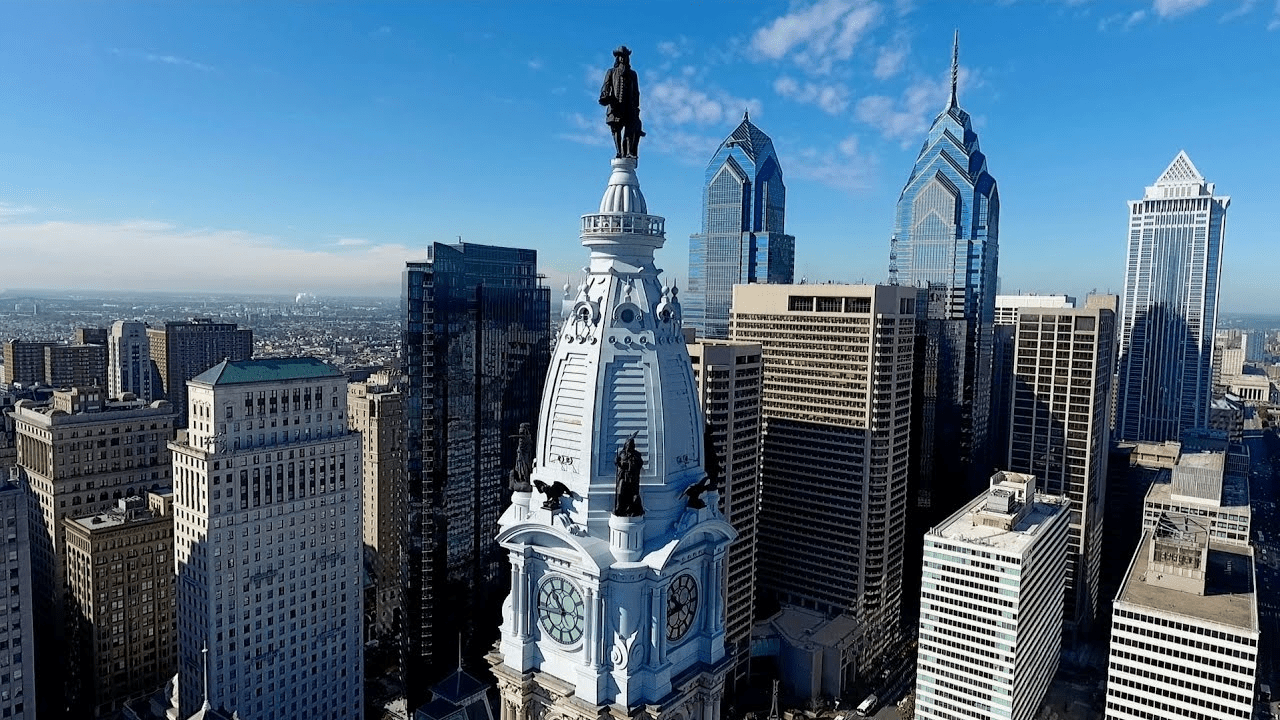
An iconic part of City Hall is the bronze statue of William Penn, the city’s founder.
- Penn was an outstanding Englishman who received land in America as payment for the debt by the king of England.
- As a Quaker, he spread ideas of democracy and religious freedom that were not common among his compatriots.
- Therefore, Penn was happy to go to the New World to spread his ideas.
The monument on top of the town hall is 11.3 meters tall and weighs 27 tons. It was designed by sculptor Alexander Milne Calder, who also created over 200 other sculptures for the town hall. The Penn statue is hollow inside, with a pedestrian tunnel leading to a hatch in the monument’s hat.
Calder intended to place the statue facing south. In this way, for most of the day, the sun would have illuminated Penn’s face, allowing the audience to observe this piece in greater detail. However, it was oriented northeast, toward the historical site where William Penn signed a treaty with a local Indian tribe. The fact is that Penn was able to reach an agreement with the Indians and prevent bloodshed. It was an unusual occurrence that gained him admiration.
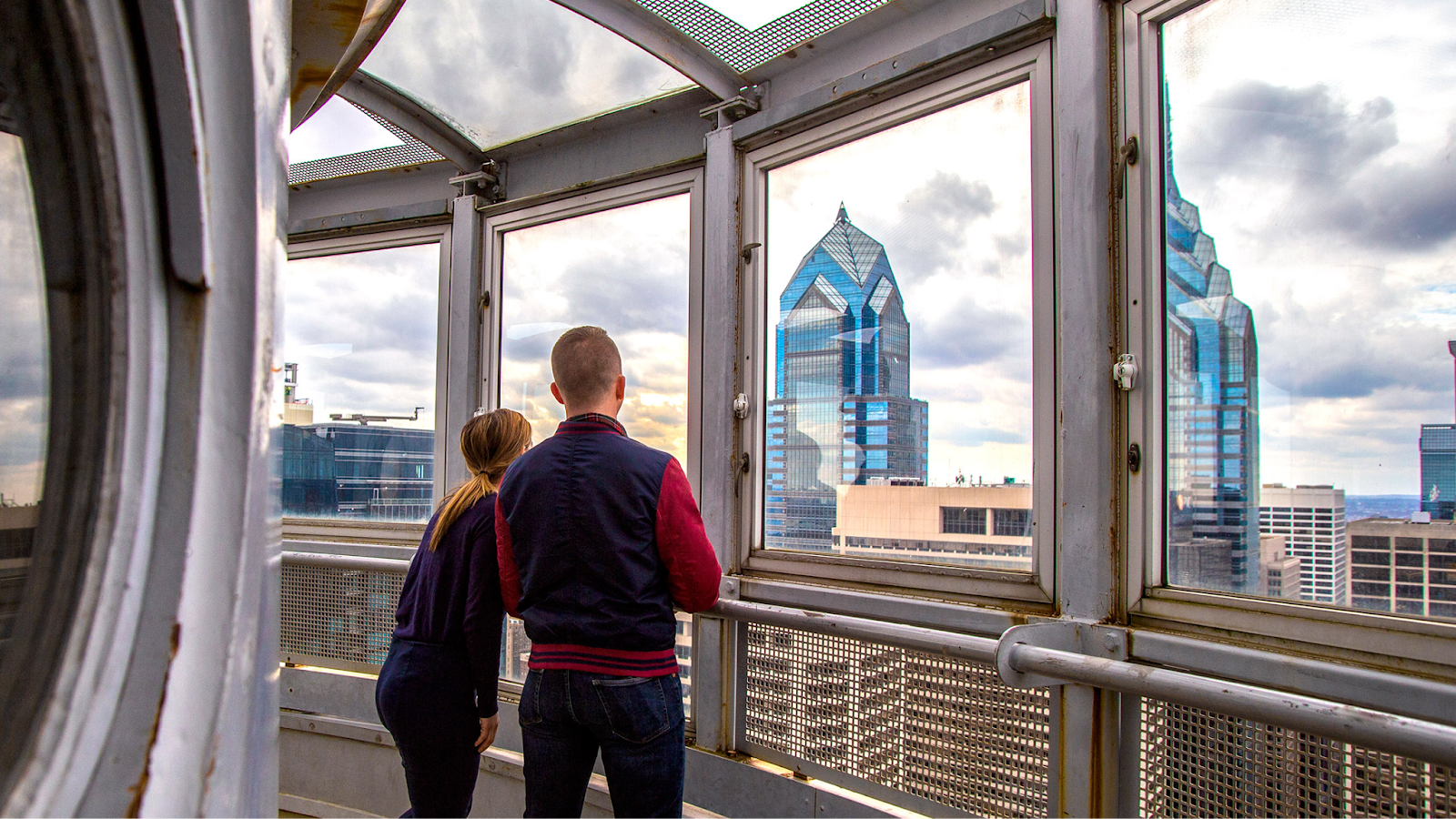
The highlight of the town hall is the observation deck located below the statue. Located at an altitude of more than 150 m above the city streets, it provides an exclusive view of Philadelphia. In the twenty-first century, glass was installed here to replace the protective grid. To reach this location, guests must take the elevator, which features a glass cabin and has a capacity of six people. Through it, you can see wooden superstructures that support the tower. There are steps inside the tower, however they only serve as an emergency exit. The tower originally had a more luxurious embellishment, but it was simplified over time. In addition, the town hall tower houses an 8-meter-diameter clock.
The role of the town hall in Philadelphia life
The design and construction of the town hall were associated with the rapid growth of the city’s population. So, by the middle of the nineteenth century, the population had quickly doubled and surpassed 500,000 people. This necessitated the extension of services and the construction of a larger facility than the previous town hall.
The Pennsylvania legislature recognized the need for a new town hall as early as 1838, but officials could not decide on the construction site of the new town hall. This lasted almost 30 years until the subject was submitted to a popular vote. Based on the results, the location where the new town hall is located was chosen.
In the twenty-first century, this structure is still used by the Philadelphia City Council. With approximately 700 rooms, Philadelphia City Hall is the largest municipal building in the United States and one of the largest in the world. There are legislative, executive and judicial authorities here, which allows these entities to optimize their activities and deliver all required services to citizens.
The town hall is also recognized as a National Historic Landmark. In 2006, the American Society of Civil Engineers designated it a National Historic Civil Engineering Landmark.
Thus, this exquisite structure has a fascinating history, unsurpassed architecture and a variety of visitor attractions.