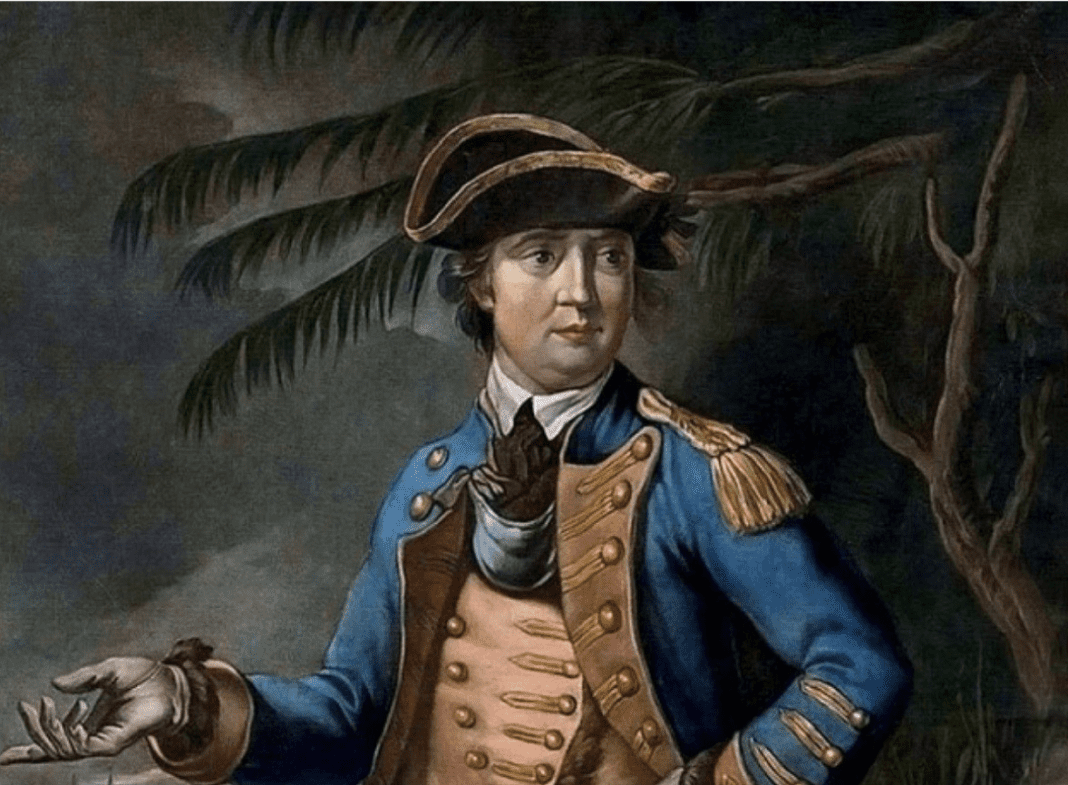

Nearly every country’s history has a figure who is both a hero and a traitor, and only time shapes the perception of such controversial figures. In the United States, at Saratoga National Historical Park, you can find a monument with no name. The sculpture, depicting a soldier’s boot on a pedestal, bears an enigmatic inscription about a “brilliant soldier” who won a major victory and the rank of Major General. Benedict Arnold’s name is omitted due to the treason he would later commit. We explore the turbulent path of the most infamous traitor in U.S. history. Read more at philadelphiayes.
Early Years
Benedict Arnold was born in Connecticut on January 14, 1741. His great-grandfather had been the first governor of the Rhode Island colony. On his mother’s side, he was a descendant of John Lothropp, an English clergyman who believed in the separation of church and state and was forced to emigrate. In the New World, his ideas were well-received, and the Lothropp family, with its 13 children, remained.
At 14, Benedict joined the militia but soon deserted. Only his young age saved him from punishment. Afterward, the young man worked in an apothecary, and relatives later helped him open his own general store. Possessing an entrepreneurial spirit and always striving for more, he purchased merchant ships at age 26 and began importing goods from Canada and the West Indies. Through this work, he learned a great deal about the black market, Great Britain’s fiscal policies, and opportunities to make more money.
Arnold aimed to become a gentleman and enter the upper class, but he was widely seen as a smuggler. He was even brought to trial, though he was acquitted of embezzling public funds. Still, the affair damaged his reputation and his family’s standing.
Benedict had three sons with his first wife, Margaret, who died at a young age. The entrepreneur’s second wife was Peggy Shippen, who bore him four sons and a daughter. Notably, all of Arnold’s sons joined the British army, and his daughter married a British colonel.
The American Revolution: Hero and Traitor
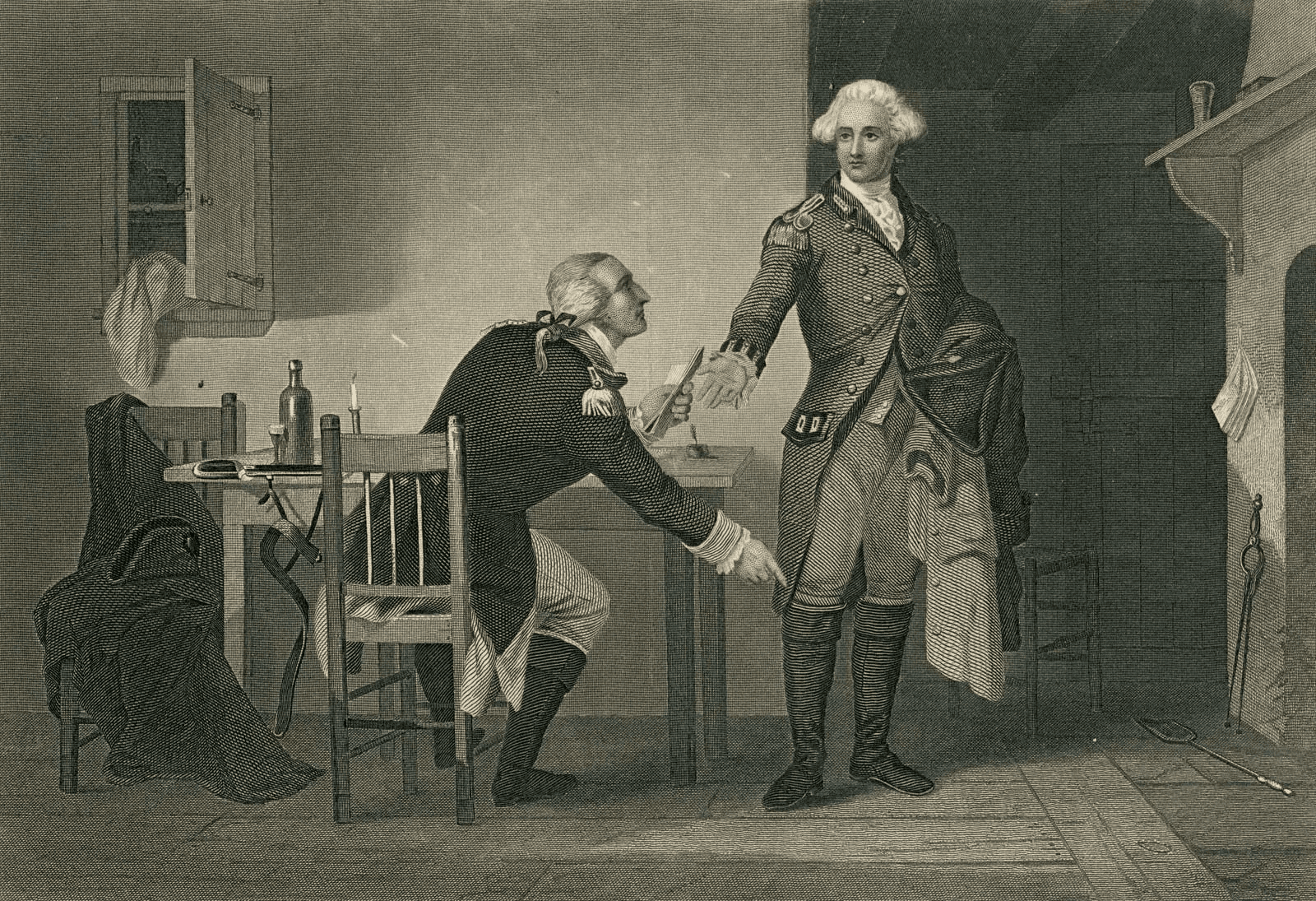
In 1775, Benedict Arnold joined the Continental Army and became involved in military events. In April, he led the New Haven militia to seize the local powder magazine. His unit then marched to Cambridge, Massachusetts, to meet with allied forces. From this point on, Arnold steadily built his reputation as a hero. All his past sins were forgotten, and his countrymen began to take pride in him.
In May 1775, Arnold helped defeat a British garrison north of New York. He then led an expedition from Maine to Quebec, aiming to rally the Canadian population to fight against the British. Quebec withstood the assault, and Arnold was severely wounded in the leg.
In October 1776, Arnold commanded an American flotilla in the Battle of Valcour Island, delaying a British advance on New York, which was crucial to the success of the American Revolution. In 1778, Arnold was appointed military commander of Philadelphia and, at George Washington’s request, was later given command of the fortress at West Point.
However, during this time, a shift occurred in Arnold’s mindset. He felt unappreciated by the Continental Congress and believed the revolution was doomed to fail. These feelings led Arnold to plot the betrayal of West Point to the British, who promised him £20,300 and the rank of brigadier general. Major John André served as the intermediary in these secret negotiations. However, André was exposed, captured, and imprisoned. Arnold managed to escape to the British, but his plot provoked immense outrage among Americans.
Major André was convicted as a British spy and hanged. Arnold responded with an open letter, “To the Inhabitants of America,” published in the New-York Royal Gazette. He attempted to justify his actions by accusing the Continental Congress of corruption and deceit, urging Americans to abandon their quest for independence and return to the monarchy. He failed to persuade his countrymen.
A Traitor’s Fate
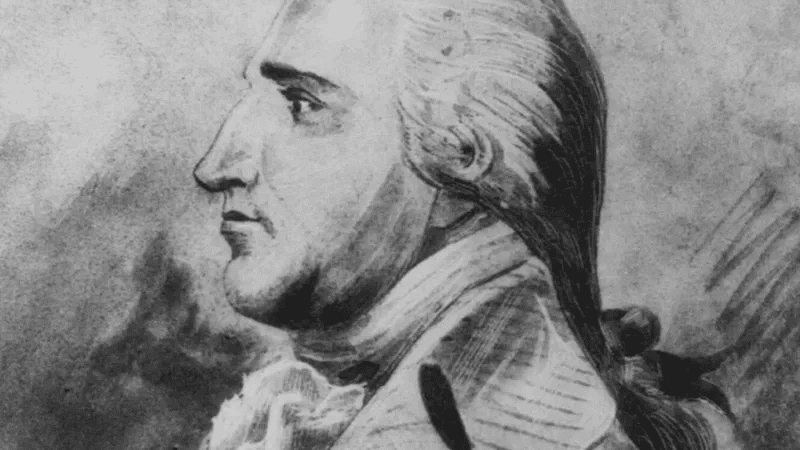
As for the British, they rewarded Arnold for his treason with a commission as a brigadier general and £6,000. However, he also lost the trust of their command. The rest of his life unfolded as follows:
- In 1782, he and his family fled to England, where he was received by the king but scorned by the elite.
- In 1787, he moved to Canada, where he and his sons went into the trading business.
- In 1791, he returned to London.
Benedict Arnold died of gout in London in 1801. The illness was a consequence of his pursuit of a lavish high-society lifestyle. Rumor has it that on his deathbed, he asked to be dressed in his old Continental Army uniform. However, even this failed to evoke sympathy from his countrymen. Benjamin Franklin famously remarked of Arnold that Judas had only sold one man, Arnold three millions.
Since then, the name Benedict Arnold has become synonymous with treason in the United States. Even the monument erected in his honor is nameless, depicting only the leg wounded in a glorious battle where the general was still a hero.