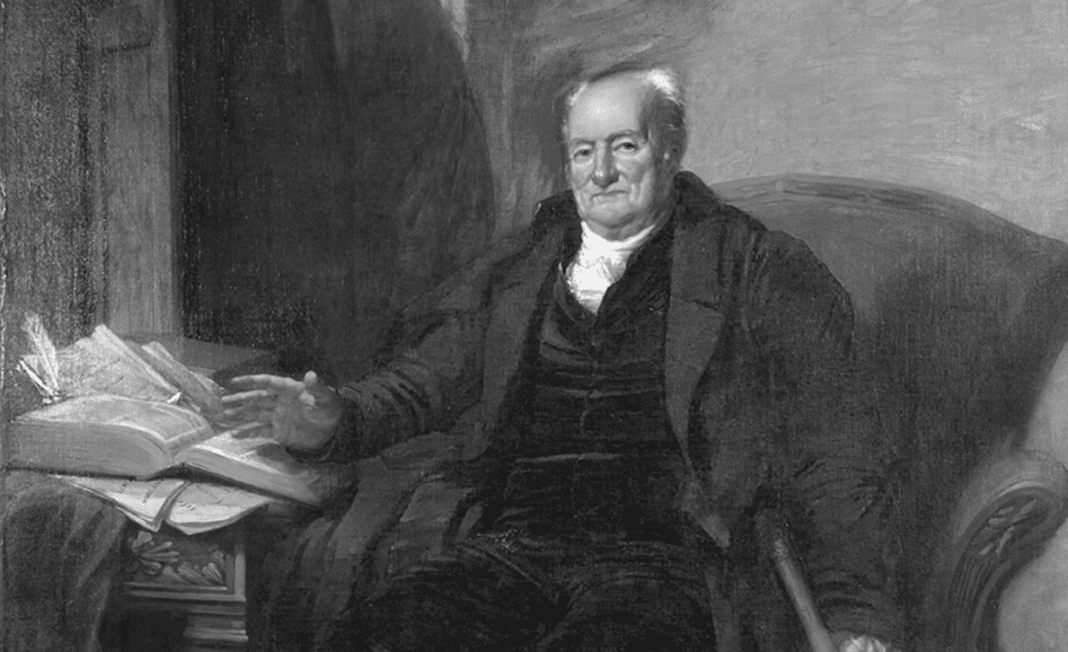

Elias Boudinot was a Founding Father of the United States, as well as a lawyer, statesman, women’s rights advocate and anti-slavery activist. During the War of Independence, he served as an intelligence officer and prisoner-of-war commissary. Later, he served in both the Continental Congress and the Congress of the Confederation, eventually becoming its leader in the final years of the war.
We will tell you more about his life path and political career further in the article at philadelphiayes.
Early years
Elias was born on May 2, 1740, in Philadelphia. The boy’s paternal grandfather was a French Protestant who moved to New York at the end of the 17th century to flee religious persecution. His son, Elias Boudinot III, was a silversmith and merchant. He was also friends with Benjamin Franklin. Elias’ mother hailed from the British West Indies.
The couple had nine children, but only four of them, including Elias, reached adulthood. His elder sister became a well-known poet. Her works were featured in numerous newspapers and magazines. Elias’ brother served as Chief Justice of the Supreme Court of New Jersey.
Elias obtained a basic education at home before his parents sent him to Princeton for further education. There, he studied law alongside Richard Stockton, who eventually married his older sister. Elias married Stockton’s younger sister. Later, Richard signed the Declaration of Independence. So, these families had a lot in common.
Political and military career
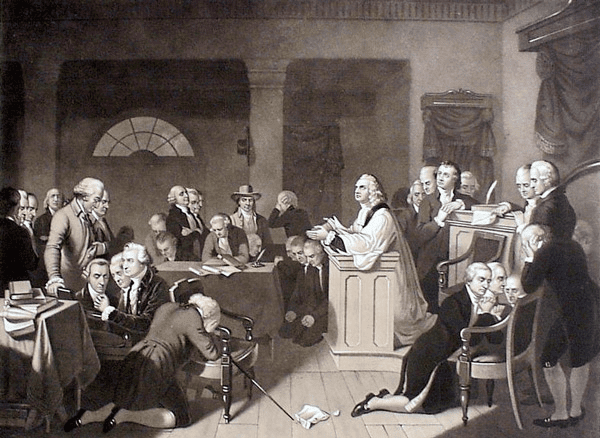
In 1760, Elias was admitted to the bar. He began his legal career in New Jersey. Additionally, he owned some land.
Boudinot immediately established a good reputation. He was sought out by many clients, and his practice flourished. In 1775, he was elected to the New Jersey provincial assembly. When the War of Independence began, Elias helped recruit soldiers and took loans to buy supplies and help spies. When the British occupied New York, several spies were dispatched to monitor their movements and garrisons.
In 1777, General George Washington invited Elias to serve as commissary general for prisoners of war. The suggestion was approved by Congress. Thus, Boudinot eventually rose to the rank of colonel in the Continental Army. He stayed in this service for the next year. He handled captured enemies and provided supplies to Americans held captive by the British.
Boudinot was also appointed as a delegate to the Second Continental Congress in the fall of 1777. He was unable to attend it due to his duties. In fact, that was why he resigned. Elias was replaced as commissary of prisoners of war in early July, and on July 7, 1778, he joined the Congress.
Boudinot’s next term in Congress lasted from 1781 to 1783. He led it for the past year. The position of President of the Continental Congress was mainly ceremonial, with no actual powers. However, Boudinot was required to write considerable correspondence and sign official documents. So, in April 1783, he was the one who signed the Preliminary Articles of Peace.
In 1789, the United States government was beginning to form, and Boudinot was elected to the House of Representatives from New Jersey. He did not join any of the political parties that existed at the time. He also opposed the Eleventh Amendment to the Constitution, which guaranteed judicial immunity for the states.
In 1794, Boudinot decided to resign from Congress and left the position the next year. However, his administrative and political career was not over at that point. In the autumn of 1795, he was named Director of the United States Mint on the proposal of the country’s president. Elias held this position until 1805.
Boudinot was a Presbyterian who engaged in a number of active social activities, namely:
- he advocated for the rights of American Indians and African Americans, as well as supported students at a boarding school for Indians in Connecticut
- to support women’s rights, he led a relevant Federalist campaign and encouraged women to political activity
- during his time in Congress, he opposed slavery
- in 1816, he became one of the founders of the American Bible Society and served as its first president
- from 1772, he was a member of the board of trustees of Princeton College.
In the final years of his life, Elias was engaged in land trade and investment. According to his will, 13,000 acres of his own property were transferred to Philadelphia for the development of parks and other public spaces.
Personal life and death
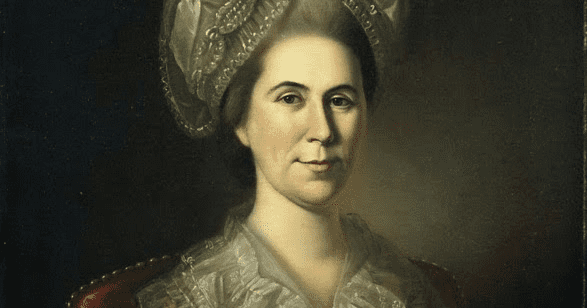
Boudinot’s wife was Hannah Stockton. The couple had two daughters. Maria died at the age of two, and Susan grew up and married William Bradford, who was the Attorney General and Chief Justice of Pennsylvania. When her husband died, Susan returned to her parents’ home to edit her father’s papers.
In 1805, the family relocated to Burlington, New Jersey. Hannah passed away a few years later. Elias died on October 24, 1821, and was buried in the churchyard of local St. Mary’s Church.