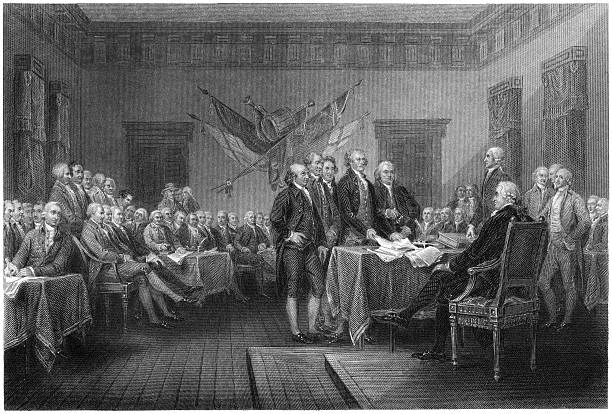

Philadelphia is often called the historical heart of the USA for good reason. It was in this city that the Declaration of Independence was signed in 1776, where the First and Second Continental Congresses convened, and where the Liberty Bell, symbolizing human rights and freedoms, was installed. We explore more about the path to U.S. independence and the story of how it was achieved. Read more at philadelphiayes.
Confrontation Between Great Britain and the American Colonies
The path to American independence began in the mid-18th century. Misunderstandings and confrontations between the American colonies and the British government became increasingly frequent, including:
- In 1765, the London Parliament imposed the Stamp Act, a tax to support military units in the New World. Citizens responded with boycotts and organized attacks on tax collectors. The tax was repealed a few months later.
- In 1767-68, Great Britain’s Chancellor of the Exchequer, Charles Townshend, initiated the Townshend Acts, a series of laws to standardize trade rules and increase payments to American governors and judges to maintain their loyalty. To achieve this, import duties were placed on goods from Europe (paint, glass, lead, tea, paper), which sparked protests. The Massachusetts House of Representatives appealed to King George III and called on the colonies to boycott imported goods. This even led to armed clashes in Boston in 1770.
- In 1773, Britain passed the Tea Act, which gave the British East India Company tax breaks, eliminating competition from other market participants. This also led to protests.
This time, the conflict did not subside. Britain blockaded the ports and decided to change the governments in the colonies. When the colonists refused to submit, Governor Thomas Gage was ordered to suppress the protests by force. In April 1775, an armed clash occurred between the colonial militia and British troops near Lexington. This event is considered the beginning of the American Revolution and the War for Independence.
The Second Continental Congress
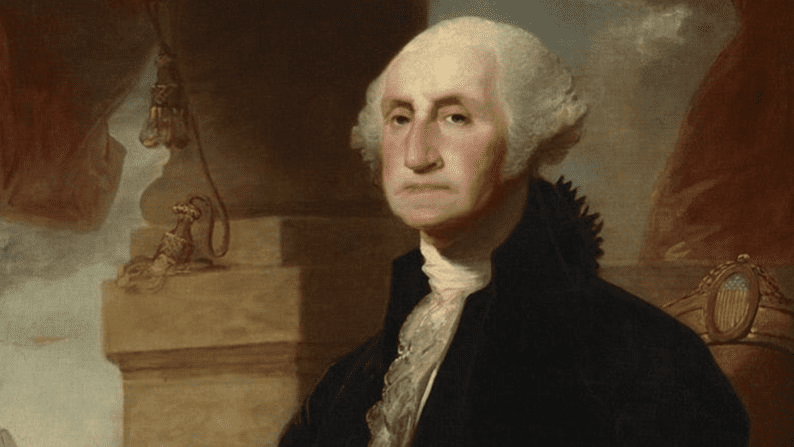
The Americans were resolute, and on May 10, representatives from 12 colonies gathered to formulate their next steps. Philadelphia was chosen as the meeting place for the Second Continental Congress. It was here, on June 14, that the decision was made to create their own army, led by George Washington, and on July 6, they adopted the “Declaration of the Causes and Necessity of Taking Up Arms.”
It’s worth noting that a few days later, the Americans also signed the “Olive Branch Petition.” In this document, they offered their loyalty and peace to the king in exchange for the repeal of laws they considered unacceptable.
When King George III received news of the armed clashes between British troops and the colonists, he refused to consider the petition. Instead, on August 23, he issued a proclamation ordering British officials to suppress the rebellion. Upon learning this, even the most loyal representatives in Congress realized that war was unavoidable. Thus, on December 6, they passed a document stating that the British Parliament’s demands were baseless, as the colonies had never been part of a democratic society.
In early 1776, Thomas Paine, editor of The Pennsylvania Magazine, published the pamphlet Common Sense. It argued that the colonies were being held in slavery by force and that a war for independence was both inevitable and necessary. The pamphlet’s circulation exceeded 130,000 copies, so the idea gained widespread publicity and, with it, popularity. On May 15, 1776, during the same Second Continental Congress, a resolution was passed recommending that colonies seeking independence publicly renounce their oath of allegiance to Great Britain and form their own new governments.
The Declaration of Independence and the War
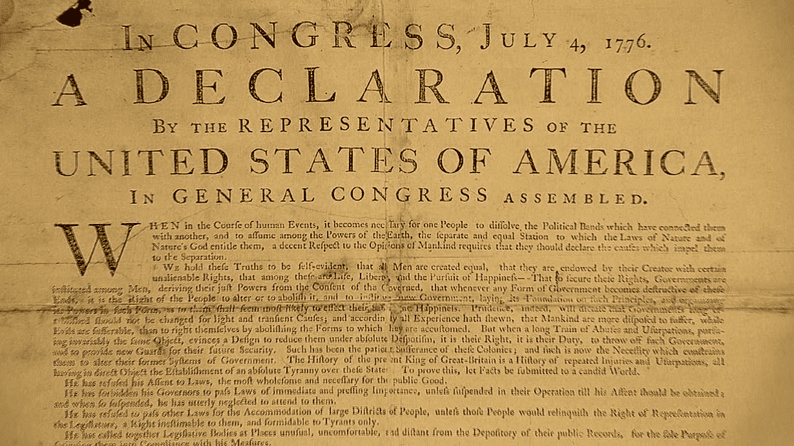
A resolution to declare independence from Great Britain and create a new confederation of states was passed at the Congress on June 7, 1776. To prepare the official document, a committee of five delegates was appointed: John Adams, Thomas Jefferson, Benjamin Franklin, Roger Sherman, and Robert Livingston. They created the “Declaration of Independence,” which was unanimously approved by the delegates of the Second Continental Congress on July 2.
Congress President John Hancock and Secretary Charles Thomson signed the “Unanimous Declaration of the thirteen united States of America” on July 4, 1776. This is the day celebrated in the United States as Independence Day. The ceremonial signing of the document took place on August 2, 1776.
Meanwhile, the war continued. The Continental Army suffered a defeat at the Battle of Long Island on August 27, which intensified the fighting. The war lasted for another five years, during which success shifted between the two sides. The turning point came in 1778 when France and Spain sided with the United States. The war ended in October 1781. The U.S. was victorious at the Battle of Yorktown, where forces under George Washington compelled the British army to surrender.
Thus, the United States successfully fought for the independence that had already been declared in Philadelphia in 1776.